Reading a denim label before it goes in the wash
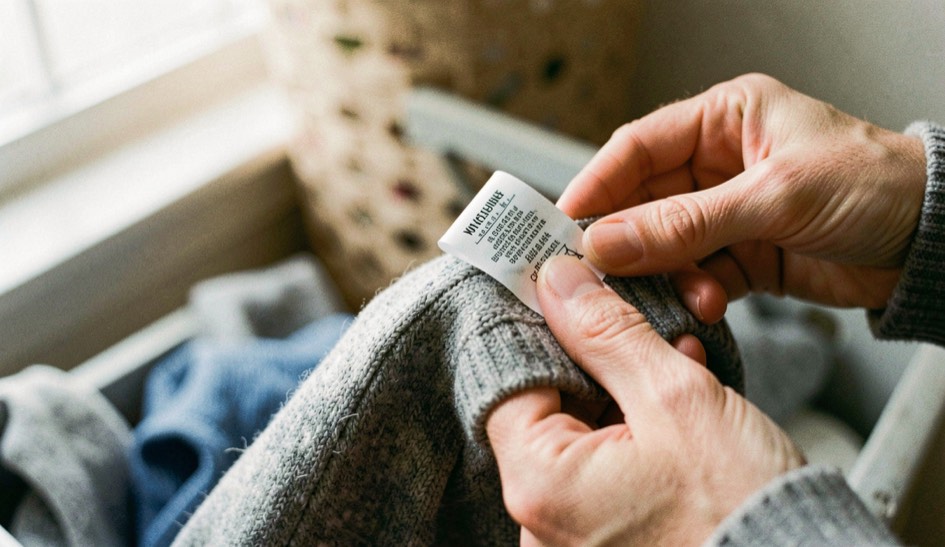
A pair of jeans is the hardest-working textile in most houses, and the one most often ruined by its owner's good intentions. The label inside the seam carries everything needed to keep it.
Denim fails in two places: at the knees and seat from wear, and everywhere else from washing too hot, too often and too long in a drum. The first is honourable and slow. The second is avoidable and quick, and it is almost always done in ignorance of what the label already says.
This entry is the label, read the way the household needs it: what the weight means for how it washes, what the weave means for how it wears, and which care symbols actually change what you do on a wash day.
For anyone who wants the same facts at the trade level, Denim Field Notes keeps a working guide to reading a denim specification: how ring-spun and open-end yarns differ, how indigo rope dyeing produces the fade, and what shrinkage and skew figures mean on a technical sheet. The long reference shelf of Heddels covers the same cloth from the wearer's side.
What does the label actually tell you?
Three facts, and each changes a household decision. The weight, given in ounces per square yard, tells you how the denim will behave: light denim washes and dries like a shirt, heavy denim holds a day's water and will not survive a hot tumble. The composition tells you whether elastane is present, and a stretch jean dried hot is a jean that sags by the second year. The care symbols are the same five that govern everything else, read the way reading a care label sets out.
- Weight. Under about ten ounces it behaves like twill; over twelve it is a winter garment that dries on its own schedule.
- Stretch. Any elastane in the composition means no hot wash, no tumble, and expectations adjusted: stretch denim trades life for comfort.
- Raw or washed. Unwashed indigo bleeds. The first washes happen alone, inside out, and the new jeans do not meet the white sofa until they have been through a cycle.
- The symbols. The tub, the triangle, the square, the iron, the circle. On denim the square matters most: the crossed-out tumble symbol is the difference between five years and two.
The buying decision is the other place the label pays. Two pairs at the same price are not the same cloth: the heavier one costs more to wash and dry and lasts longer at the knees, and the stretch one is comfortable on day one and baggy by year two. Reading the label in the shop, before the money is spent, is the cheapest inspection the household will ever run.
Why does the wash decide the life of the garment?
Denim wants to be washed less often than instinct says. Between washes it wants airing; spot marks want a cloth, not a cycle; and when a wash does happen it is cold, inside out, on a short programme, with the jeans dried flat or on the line rather than in the drum. The households that get a decade out of a pair are not doing anything exotic. They are doing what the label said, which is exactly the habit in line drying indoors without the damp.
Repairs sit inside the same discipline. A small hole at the knee is a patch and an evening's darning, not a reason to retire the garment, and the patched knee of a heavy pair outlasts the unworn leg of its replacement. The label that governs the wash governs the mend too: the same cloth that wants a cold cycle wants a matching-weight patch.
What it is not
It is not an argument for expensive jeans. A supermarket pair treated properly outlives a premium pair tumble-dried weekly; the label, not the price, carries the garment's expectations. And it is not a rule against the tumble dryer in general. It is a rule for this cloth, decided by the weight and the stretch written inside the seam, which is why the label is read before the first wash and not after the first shrink.