About Kept
Kept is the practice of running a home, written down. It is a register: every entry is dated, filed under one of six sections, and revised when the practice changes.
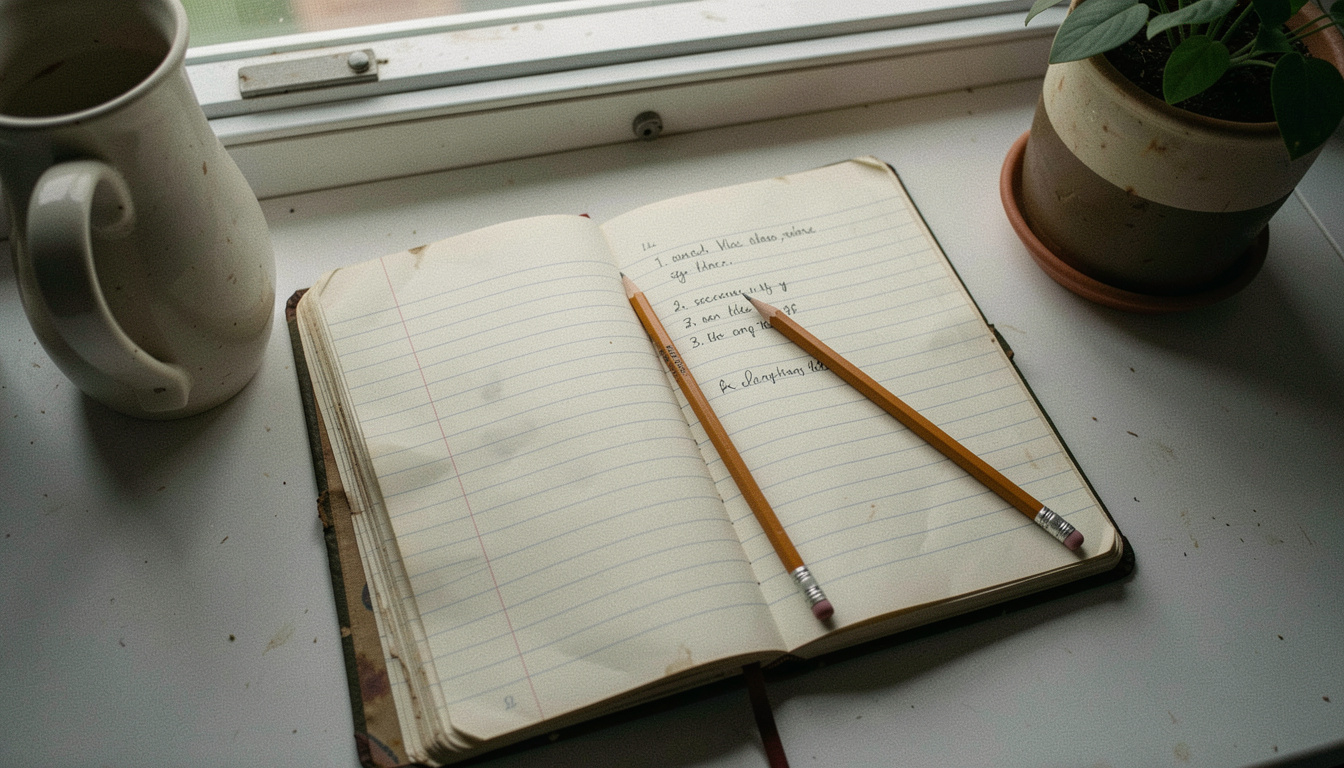
Housekeeping is usually written about in one of two registers. Either it is aspirational, photographed in a house nobody cooks in, or it is a list of tips with no argument holding them together. Kept is neither. It is a working record: what the job is, how it runs, how long it takes, what it deliberately leaves out, and how it behaves in a bad week.
The form is a register rather than a magazine. Each entry carries the date it was filed and the section it belongs to, in the same place on every page, so that the record can be read in order and so that a revision is visible as a change of date rather than as a silent edit.
The six sections
Everything a household does falls into one of six places, and the section decides how an entry is written.
- Routines. The repeated work: what happens every evening, every week, at the turn of a season. Routines are the only part of housekeeping that compounds.
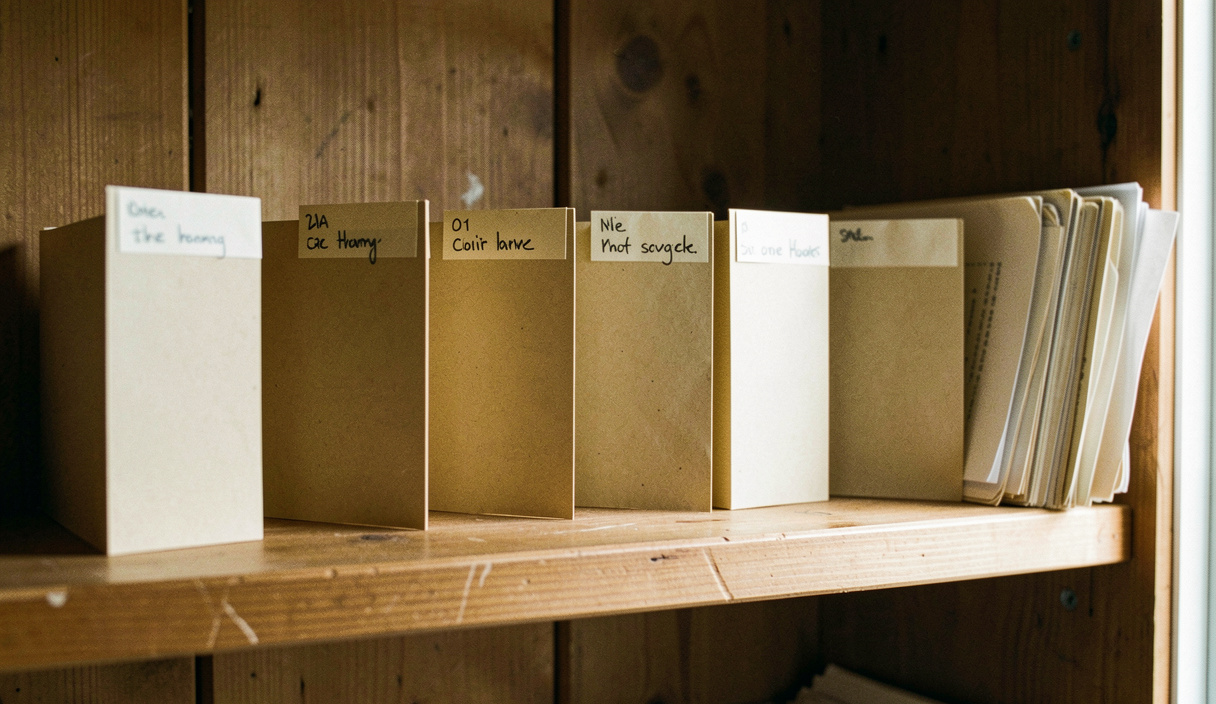
- Storage. Where objects live and why they end up somewhere else. Frequency of use, reach, labels, and the shelves worth leaving empty.
- Upkeep. Maintenance before repair. Seasonal walks, filters, drains, hinges, and the small failures that only get expensive when ignored.
- Textiles. Laundry, bedding, towels and the fabrics that wear out first, including where the water goes when washing dries indoors.
- Provisions. The store cupboard and the week ahead: lists, rotation, and batches worth making.
- Records. Papers, warranties, meter readings and inventories. What has to be findable in two minutes.
How an entry is written
An entry says when the practice runs and how long it takes, in minutes and in degrees where numbers exist. It gives the order of operations, because deciding what to do next is where most household time is lost. It states what the practice does not cover, since deliberate omissions are what keep a routine short enough to survive. And it says what happens when the week goes badly, because a habit that only works in good weeks is not a habit.
Entries link to each other when the reader needs it and not otherwise. An obstacle that keeps coming back during an evening tidy is a storage problem wearing an evening disguise, so the entry says so and points at the shelf where the real question lives. That is why the sections are worth reading across rather than one at a time.
What the record contains
The register opened in March 2026 with the household inventory, written once, and it now holds nineteen entries across the six sections. The whole of it can be read in date order on the index of entries, and the most recent entries are always on the front page.
Dates are shown throughout as day, month, year. When an entry is revised because the practice changed, its date changes with it and it returns to the top of the record, which is the honest way to show that something is not the same as it was.
Where to start
Two entries change a house faster than the rest. In the evening, the fifteen minute reset, which is a single timed pass through the shared rooms and costs nothing to try tonight. In the cupboards, where things live, and why frequency decides it, which removes most of the tidying before it starts by putting daily objects within reach of the moment they are used.
After that, the useful order is whichever section is currently annoying you most. A house that is level in the evenings but chaotic on a Wednesday needs ten minutes with the calendar. A house with damp on a bedroom wall needs the drying arrangement before it needs anything else.