The fifteen minute reset
One short pass through the shared rooms before bed does more for a house than an entire Saturday. Here is the order it runs in, what it deliberately leaves alone, and why the timer matters more than the standard.
A house does not become disordered slowly and evenly. It becomes disordered in the two hours between coming home and going to bed, when everyone is tired and every surface is available. Whatever is left on those surfaces at eleven at night is what greets the household at seven the next morning, and a morning that starts with yesterday's plates costs an hour of goodwill before anyone has spoken. The desk counts as one of the rooms: an open family-history folder gets closed and squared, not re-filed mid-research.
The reset is the answer to that specific problem, and only that problem. It is a single pass through the shared rooms, run at the same point in the evening, against a timer set to fifteen minutes. It is not cleaning. Nothing is scrubbed, nothing is polished, no cupboard is opened with intent. The reset moves things back to where they live and stops. The same pass is what makes a room usable again at short notice: a table cleared nightly is a table that can run a games evening at home on a Tuesday without preparation.
The order it runs in
The order matters because deciding is what costs time. Run the same circuit every night and the household stops choosing what to do next, which is where most of the fifteen minutes would otherwise go.
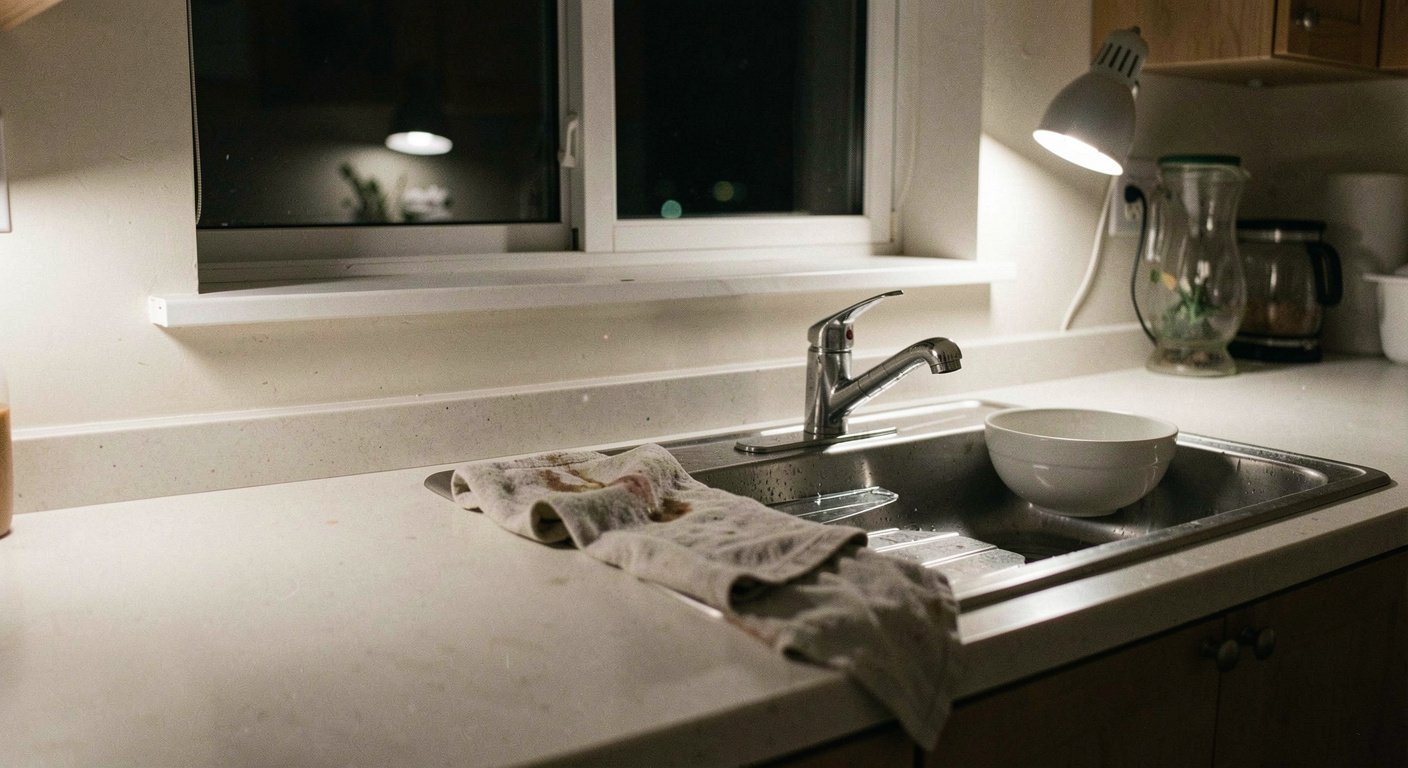
- Kitchen surfaces first. Everything that is not a permanent resident of the worktop leaves it. Plates into the machine or the sink, food into the cupboard or the cold, cloth over the counter once.
- The table second. Homework, post, keys, chargers. Each goes to its own place, not into a pile that will be sorted later, because later never has a date.
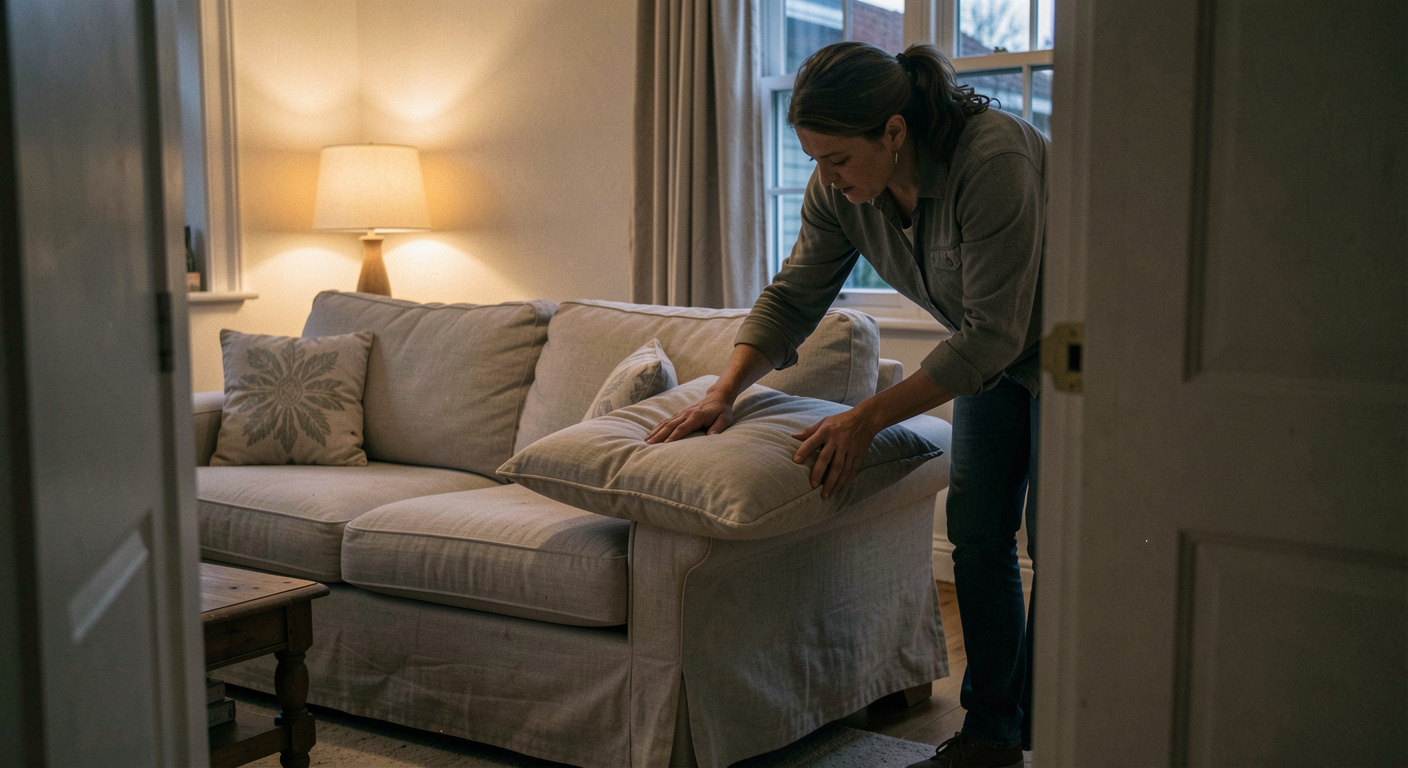
- The living room third. Cushions squared, throws folded once, remote controls to the same corner of the same shelf, mugs collected on the way out.
- The hallway last. Shoes onto the rack, coats on hooks, bags off the floor. The hallway is where the next morning is either easy or not.
Four rooms, roughly three minutes each, with a couple of minutes of slack. If the kitchen takes nine minutes on a Thursday, the living room gets whatever is left and the rest waits for tomorrow. That is not a failure of the routine, it is the routine working as designed. The dog's corner is part of the pass in a house that has one: the grooming basket and the lead hook are squared like everything else, which is the corner described in living with a long-coated dog.
Why the timer, and not the standard
Most household routines fail because they are defined by a result rather than by a length. "Tidy the kitchen" has no end, so it is postponed on the days it is most needed. "Fifteen minutes on the kitchen, the table, the living room and the hallway" has a definite end, and a tired person will start something that ends.
The timer also protects the rest of the evening. Without it, a reset expands: one person starts wiping the inside of the fridge at ten past eleven and resents the whole arrangement by Thursday. Set the clock, work quickly, stop when it sounds even if a corner is unfinished. Consistency at seventy per cent beats perfection every third night, and by a wide margin.
What the reset does not touch
Deliberate omissions are what keep the pass short. The reset does not do laundry, because laundry has its own rhythm and a wet load left in the machine at midnight is worse than a full basket. It does not deal with paper beyond moving it to the drawer, which is a separate job with its own folders. It does not enter bedrooms, which belong to the people who sleep in them. And it never starts a project: a drawer that needs sorting is noted, not opened. The denim that wants a cold, rare cycle stays out for the same reason: reading a denim label is a different habit from clearing a room. The medicine cupboard is another omission of the same kind, a small store with its own rotation in the medicine cupboard rather than a nightly job.
Anything the reset keeps bumping into is a storage problem wearing an evening disguise. If the same six objects have to be carried back across the house every night, they do not live in the right place. That is worth twenty minutes on a Sunday, once, rather than ninety seconds every night for a year. The instrument that migrates between case and shelf is the same question at larger size, settled in where an instrument lives, and the games that come down and go back up belong to the rainy-day shelf.
Making it stick
Attach the reset to an existing event rather than to a time on the clock. After the last plate of the evening, after the news, after the youngest is in bed. Times are ignored, sequences are not. The evening before a day out is one of those events: the field-trip file is folded together at the table and the reset runs first.
Share it if there is more than one person in the house, and split it by room rather than by task. Two people doing two rooms each finish in seven minutes and neither one is supervising the other, which is the arrangement most likely to survive a bad week.
Expect it to lapse. A week away, an illness, a stretch of late nights, and the reset stops. It restarts the same way it started: one evening, the timer, the same four rooms in the same order. Nothing needs to be recovered first, because the reset is not a standard to be met, it is a habit that lowers the cost of the next one. A week away has its own routine for the house itself, written down in closing the house before a week away, and the longer absences have theirs in keeping the house steady while someone gets help.
After a month of nightly resets, the weekly work changes character. Surfaces are already clear, so the weekly hour is spent on things that actually need an hour: floors, bathrooms, the fridge. That is the real return on fifteen minutes, and it only shows up after the habit is old enough to be boring. The quarterly jobs surface the same way: once the nightly pass is habitual, a house kept by season reads as the natural next layer.
The fifteen minute reset works best when it ends on one thing that is checked rather than tidied. Walk the house once, put back what has drifted, then spend the last minutes on a single recurring task. Smoke alarms repay this attention: each one is tested, and any that stays silent, has seen ten years, or carries a manufacturer's date that has passed is replaced. The yearly fire-safety round sets out where each alarm belongs and how a night plan is rehearsed in the dark.