Putting the childhood soft toys away so they come back whole
Of everything a household stores, the childhood soft toys wait the longest and are thought about the least. The difference between a toy that survives and one that does not is a single afternoon, done before the box is taped.
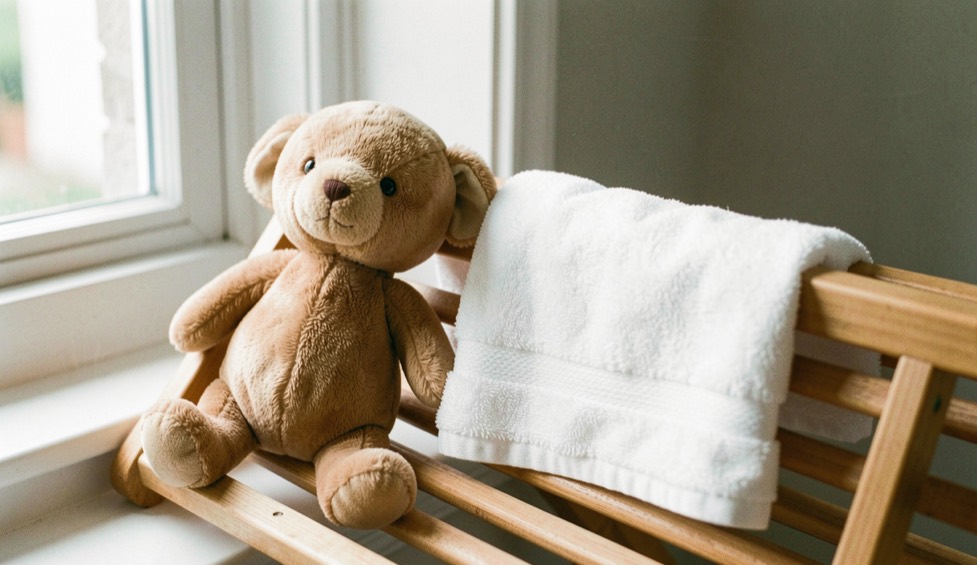
Most soft toys go into the loft in a bin bag, still smelling of the bedroom, unlabelled, and they come down twenty years later flat, yellowed and smelling of the bag. It is a small loss and a common one, and it is almost entirely avoidable. Most of the work is not the box itself but the week before the box.
What actually ruins a stored soft toy
Four things, all preventable. Damp is the first: a toy stored even slightly moist grows mildew inside the stuffing, and mildew smells for good. Compression is the second: vacuum bags flatten the filling permanently and split old seams under the pressure. Heat is the third, because a loft in summer is the harshest room in the house. The fourth is plain dirt, which feeds the moth and fixes the odour into the pile.
A bin bag fails on all four counts at once, which is why the bagged box in the loft is where childhood goes to smell of plastic.
The wash before the box
A toy goes into storage clean, or it does not go in at all. What the sewn label allows decides the method, which is the same reading described in reading a care label without guessing: most modern plushes take a gentle machine wash inside a pillowcase, while older or jointed bears want surface washing only. A German-language care desk for teddy bears writes the whole question down, how often to wash, at what temperature and how to dry one through, in the washing and repair notes kept for parents and grandparents.
Drying is the part that takes a week rather than an afternoon. A toy that feels dry on the surface is often still wet inside the stuffing, and boxing it at that stage is the mildew scenario exactly. Air it until it has spent days in a warm room rather than hours against a radiator, which dries the outside first and leaves the middle damp.
Which toys go in, and which stay out?
The sort happens before the wash, not after, because washing is work and the box is finite. The toys that go in are the ones a future household will want: the favourites, the gifts with a name attached, the one that travelled everywhere. The toys that stay out are the ones still played with, and the line is drawn by the child where there is one, because a box packed by stealth is a box that gets unpacked in anger.
Damaged toys get their afternoon before the box rather than inside it. A seam re-stitched takes ten minutes now and saves the toy; a seam left open loses its stuffing inside the box and arrives as a bag of cloth. What is beyond repair does not get stored, it gets decided, which is a different and harder question that this entry does not pretend to answer.
And the box itself is sized to the memory, not to the loft. A single box that can be carried by one person survives moves and house sales; three crates of toys survive nothing, because at some point somebody has to decide to keep carrying them.
The box and the label
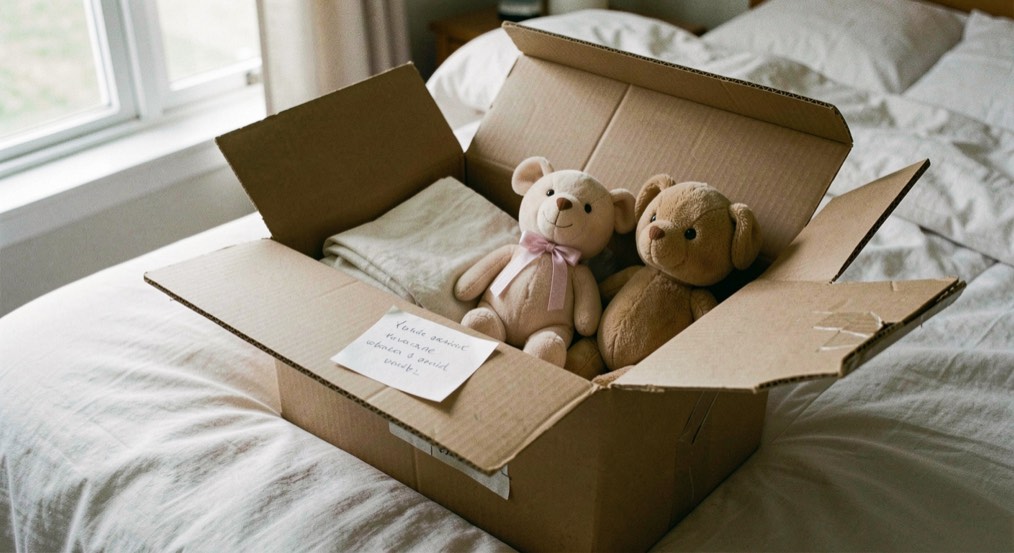
The container wants to breathe. A lidded cardboard box or a cotton bag keeps the dust off while letting the last of the moisture out; a sealed plastic bag does the opposite, and a vacuum bag does worse. Museum collections hold stored textiles to the same four rules, clean, dry, padded and able to breathe, which is the substance of the conservation guidance written for household treasures and it transfers to a cardboard box unchanged.
Label the box as if for a stranger, because the person opening it in twenty years is effectively one. Contents by name, whose they were, the year they went in. That is the same requirement as labelling that survives a year, only stricter, because this label has to survive twenty.
Where the box lives for twenty years
Position is the last quiet decision. The box goes off the floor, on boards or a pallet if the loft floor is doubtful, and not directly under the felt where summer heat peaks and winter drips start. It goes somewhere it can be reached without moving three other boxes, because a box that cannot be checked is a box that will not be checked. The loft is the usual answer and the garage the usual mistake: the freeze-thaw and fumes of a working garage are harder on fabric than a boarded loft ever is.
Once a year the box is opened on the boundary walk's indoor equivalent: five minutes, no repacking, just a look for the damp spot, the moth speck or the label that has curled. A toy box that passes twenty annual checks comes down intact; the checks are what the twenty years are made of.
And keep one out. A box that holds every toy is a box that holds a negotiation; the household that stores the rest and leaves the favourite on the shelf keeps both a tidy loft and an intact archive. It is the same rule as letting frequency decide where things live: what is still handled stays out, and what is kept stays whole.
What it is not
It is not archiving. Nobody needs acid-free tissue for a toy that was loved hard and is going to be loved again; the standard is a toy that comes back safe and smelling of nothing, not a museum mount. Nor is it decluttering: the question of which toys leave the house is a different and harder afternoon, and it is answered before the box, not inside it.
Do it in the order the toys deserve: read the labels, wash what is washable, air for a week, then box with a list. The loft takes the rest.