The four towel rotation
Four towels per person, two in service and two in the cupboard, is enough for a household that washes weekly. It also stops towels dying of overwork in the same month.
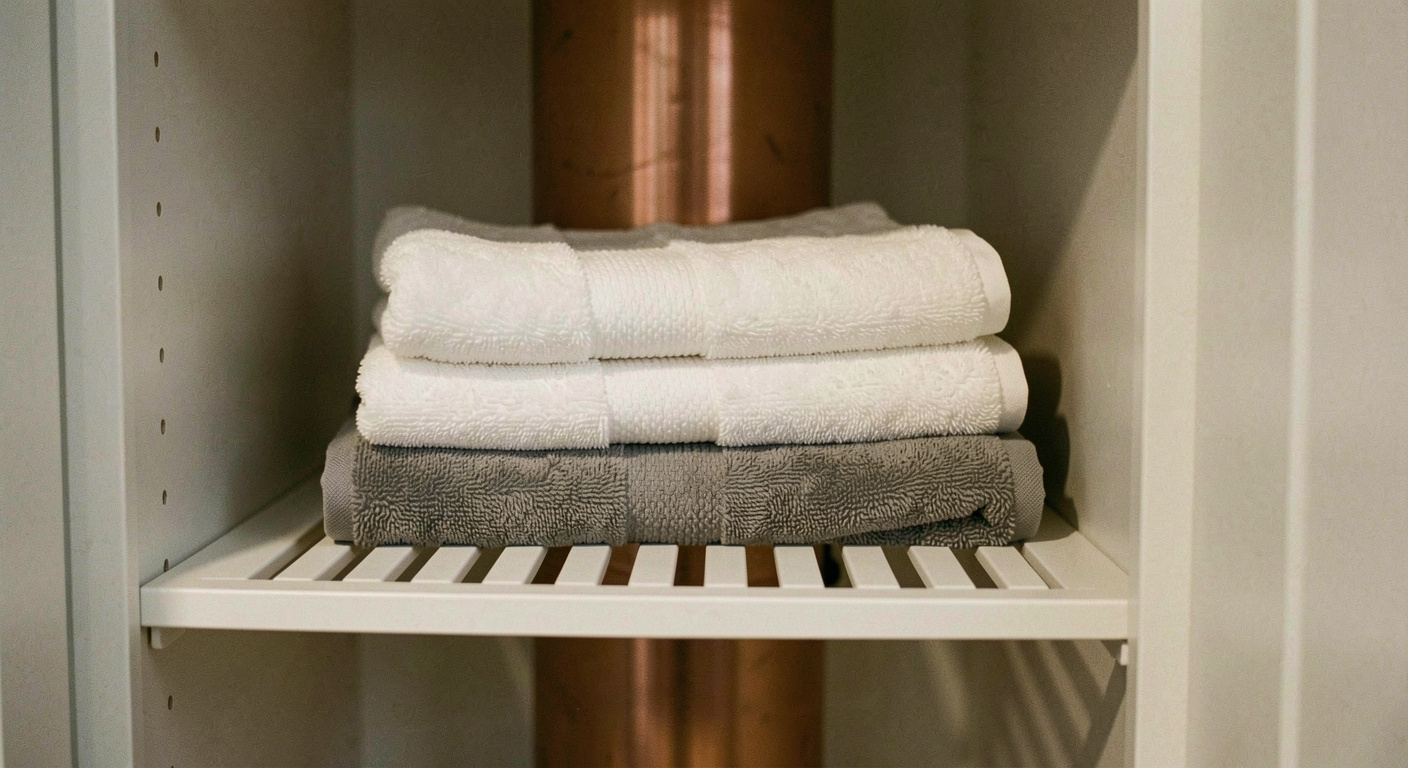
Households tend to own either far too many towels or far too few, and both produce the same complaint: nothing ever feels properly dry, and the towels go hard within a year. The number that works for most people is four per person. Two in service, two in the cupboard, and a fixed day when they swap.
Four is not about luxury. It is the smallest number that lets a towel dry completely between uses, gives the wash a full load once a week, and covers the week when somebody is ill or a guest arrives.
How the rotation runs
- Two on the rail. One bath towel and one hand towel per person, hung spread out rather than folded over a rail, so both faces get air.
- Two in the cupboard. The clean pair, folded, waiting.
- One swap day a week. The pair on the rail comes down, the clean pair goes up, the used pair goes straight into the machine rather than into a basket.
- Kitchen and tea towels are separate. They are washed hotter and more often, and they should never share a rotation with bath linen.
Fixing the swap to a day is what makes the system work without anyone counting. Sunday morning, or whichever day the bedding is stripped, so that one load covers both and the wash does not multiply.
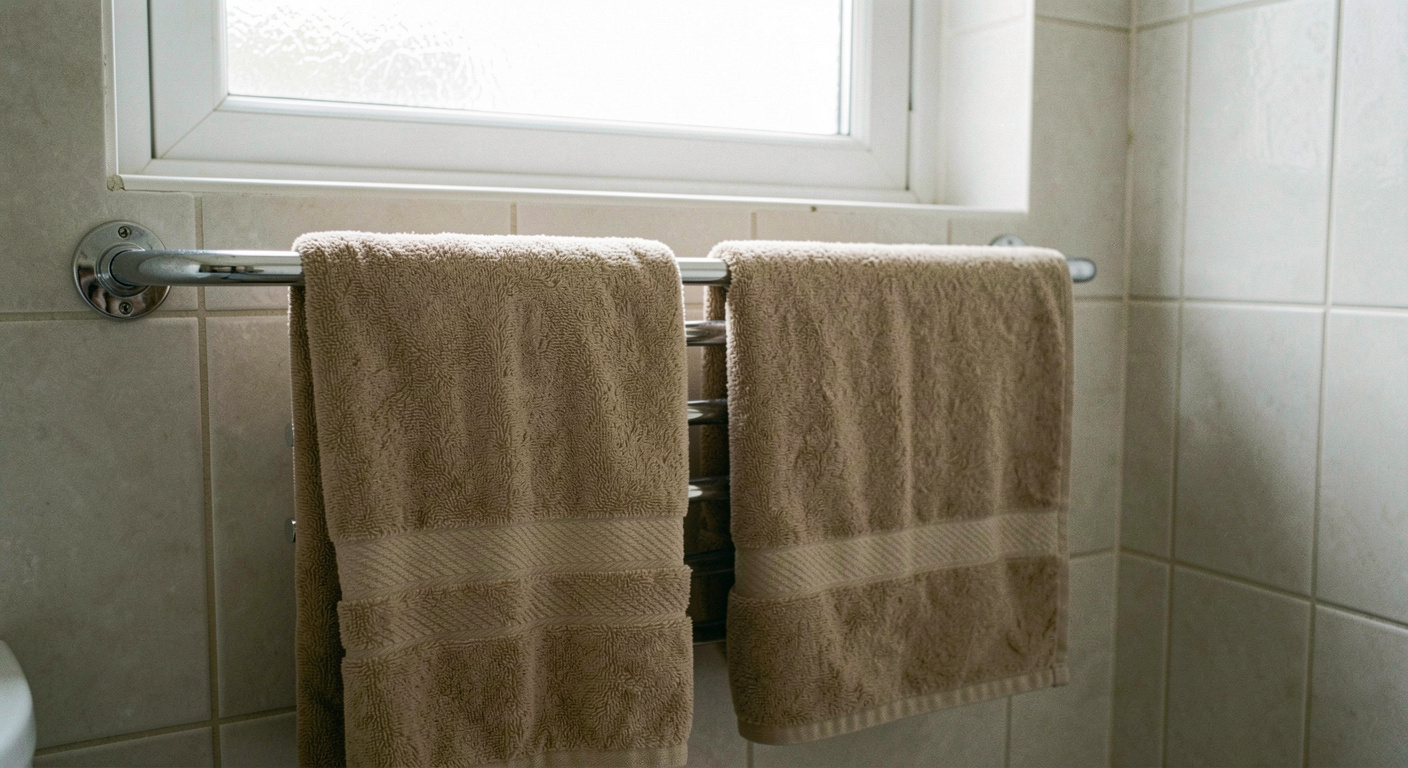
Why towels go hard
Three causes, in order of how common they are.
Fabric softener. It works by coating fibres, and a coated cotton loop absorbs much less water. Towels treated with softener feel soft in the cupboard and then fail at the one job they have. Leave it out entirely. If towels feel stiff, a cup of white vinegar in the rinse strips residue and softens them without leaving a coating.
Too much detergent. Towels are bulky and absorbent, so residue does not rinse out. Use less than the scoop suggests, and run an extra rinse if your machine has one.
Over drying. Cotton loops become brittle when they are dried until hot and bone dry. Take them out slightly short of fully dry and finish them on a rail or a line, and they stay pliable for years.
Washing them properly
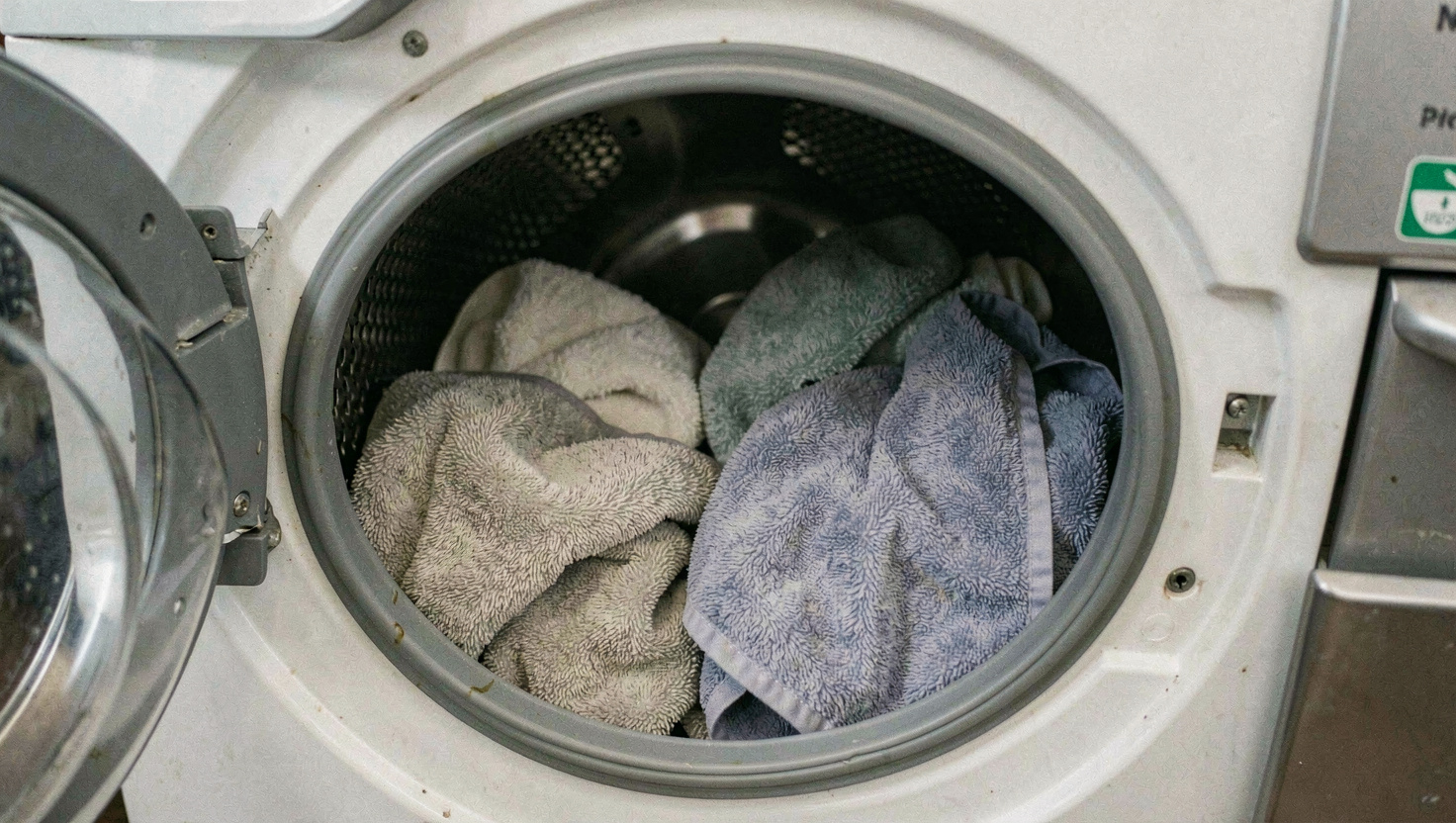
Wash towels together, without clothing, because they shed lint and because they need a longer, hotter cycle than most garments. Sixty degrees is the usual recommendation for bath linen; forty is enough in an ordinary week, with a sixty degree wash monthly or after illness. Read the label first, since dark and patterned towels sometimes carry a lower ceiling, and the symbols are covered in reading a care label without guessing.
Do not overload. Towels need room to move or they come out with detergent still in them, and a drum more than about two thirds full does not agitate properly. Three or four bath towels is a load in a standard machine, which is exactly what a four towel rotation for two people produces each week.
Spin hard, and then dry them where air moves. Towels are the heaviest thing a household dries, and drying them badly indoors puts more water into the air than anything else in the wash. The arrangement that works is set out in line drying indoors without the damp. Denim is the garment that most wants the same treatment: reading a denim label is the version of this entry for the cloth that is never tumble-dried.
Buying and retiring
Buy in one colour per household member, or one colour for the house. Matching towels are not about appearance, they are about the rotation being visible: a stack that is all the same tells you at a glance how many are in service. Weight is the other thing worth checking, and it is usually printed as grams per square metre. Somewhere around 500 to 600 is a good bath towel, heavy enough to absorb and light enough to dry. Above 700 the towel is impressive and takes two days to dry indoors.
Retire on function, not on appearance. A towel that no longer absorbs, that stays damp, or that smells within a day of being hung has finished, whatever it looks like. Cut retired towels into cloths for the kitchen, the car and the ten minute jobs around the house, and they earn another two years in a role where absorbency matters less.
Buying four at a time and retiring four at a time has one drawback worth planning around: they age together and fail in the same month. Stagger it. Replace two, keep two, and the cupboard never empties at once.
Where they live
The clean pair belongs in the room where it is used, not in a cupboard on another landing, because a towel stored two doors away gets fetched once and then left on a chair. If the bathroom has no cupboard, a shelf above the door is still in the right room. The principle is the ordinary one of letting frequency decide where things live: weekly things belong one step away, daily things belong at arm's reach.