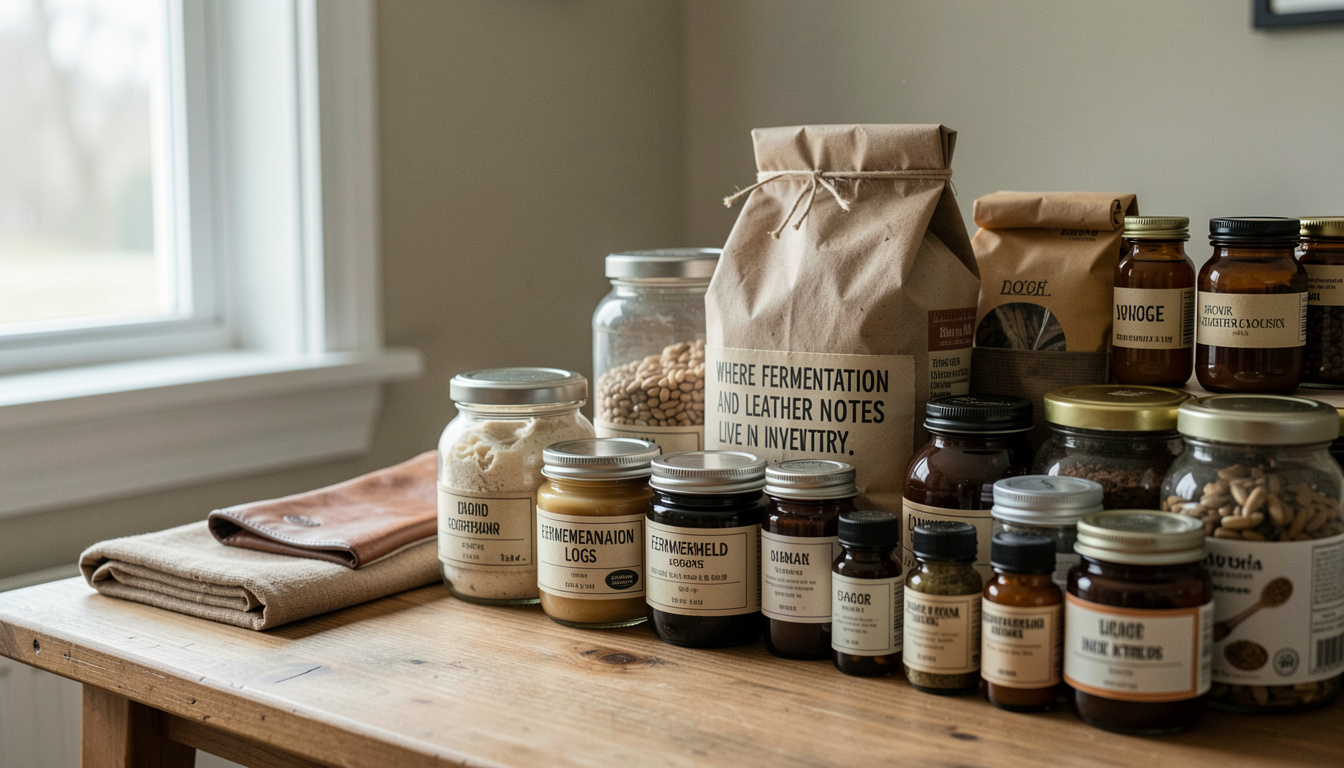
A household inventory works when each object has a place on paper and each note can be found again. Jars in brine and chairs in leather belong in the same record when the record notes what was done, what was used, and where to look next.
What does a household record keep for food in jars?
It keeps the date of the start, the vegetable, the salt strength used, the container, and where the jar rests. It also keeps the source of the method, so a later reader knows which guide was followed and why that choice was made. A short line per batch is often enough, with a reference to the full method kept nearby. The aim is continuity from one season to the next, without reliance on memory. When a jar is opened, the record notes the result and whether the method should be repeated. When a jar is stored, the record notes the location and the holding time expected. This habit links the pantry shelf to the paper drawer, and it keeps food history readable in ordinary language.
A public manual that lists salt strengths and holding times vegetable by vegetable from the USDA guide and the extension services shows why source matters. The record at home does not repeat the whole manual. It notes which vegetable entry was used and which named document stood behind it, so the household keeps a trace rather than a copy.
Where does leather furniture sit in the same inventory?
It sits beside the food record, on its own page, with maker when known, material when known, and place in the room. The page notes color, surface character, and past care, in plain terms that any member of the household can understand. It also notes problems as observed, such as dryness, scuffs, or loose seams, without diagnosis beyond what can be seen. Receipts, care tags, and warranty notes are filed with the page or referenced by folder and slot. The result is a stable description that can be handed to a repair worker or reread before care is applied.
A reference that helps to identify the material and problem for furniture and automotive interiors, with attention to care and repair and tools, shows the value of naming before acting. The household page does not need tools or products. It needs a clear name for the object and a clear note of its condition.
How should paper hold methods without copying them?
Paper should hold a pointer, not a transcript. For each method, write the title of the guide, the office that issued it, and the page or section used. For fermentation, note the vegetable entry and the salt strength path that was followed. For leather, note the type as described on the tag or receipt and the care note that came with the piece. Keep the full guides where they can be found again, and keep the inventory short enough to reread. This separation keeps the record light and keeps responsibility clear. The inventory says what was done at home. The guide says how the method works in general.
Index entries help here. One line under the object name can point to the method source, the warranty folder, and the maintenance page. When the source is an office with public guides, name the office. When the source is a maker note, name the maker as printed.
What belongs in a maintenance calendar for pantry and seating?
A maintenance calendar holds checks, not tasks alone. For jars, it holds observation dates, storage checks, and planned use. For seating, it holds dusting rhythm, light and heat notes, and condition review. Each entry answers three points: what to look at, where the object stands, and what record to update after the look. Squeaks, drips, and small fixes have their own place, with ten minute actions noted where they recur. The calendar does not replace the inventory. It moves the reader back to the inventory page that needs an update, so paper stays in accord with the room.
- Pantry check: look at seals, storage place, and log lines to close
- Seating check: look at surface, seams, and care page to update
- Warranty check: look at folders, receipts, and contact lines to confirm
- Inventory check: look at index of entries and upkeep notes to align
How do warranties stay where they will be found?
Warranties stay findable when each one lives with the object page that needs it. A paper drawer with folders by room or by function can hold them, with one folder for kitchen stores and one for furniture and seating. On the object page, write the folder name, the position inside, and the period of cover in the terms used on the paper itself. Do not rewrite terms in new words. Keep the original slip, keep the receipt with it, and keep a note of where a replacement tag might be ordered if the maker provides one. When a claim arises, the path runs from index to object page to folder, without search through loose piles. When cover ends, the page notes the end and keeps the paper for reference on materials and care.
| Record part | What it notes | Where it lives |
|---|---|---|
| Inventory page | Object, place, material or batch | Binder by room |
| Method pointer | Guide title and issuing office | Line on object page |
| Warranty slip | Terms as printed with receipt | Folder by function |
| Calendar line | Check date and page to update | Upkeep calendar |
How can records stay readable for years?
Records stay readable when language stays plain, ink stays dark, and pages stay in order. Use one term for one thing, and keep that term across inventory, calendar, and folders. Write out names of offices and guides rather than shortening them. Keep corrections visible with a single line and a new entry, so change over time remains legible. Store paper away from heat, light, and damp, and keep copies of pages that travel to a workshop. Review the index of entries at set times and prune lines that no longer point to an object in the house. Upkeep here means care for paper as well as care for jars and chairs, so that what was written once can still be read and used.
The household inventory, written once and kept with warranties where they will be found, turns separate concerns into one order. Food logs point to public method sources. Furniture pages point to material notes and repair questions. The maintenance calendar points back to both. With squeaks, drips, and small fixes noted in their place, the house keeps a record that serves daily life and long memory at once.
Sources
For paper preservation and family records, see U.S. National Archives and for home food preservation method sources, see National Center for Home Food Preservation.