A house at altitude: snow load, pipes and winter work
Snow load asks a roof to carry the weight of everything that falls on it and does not slide off, and to do so through repeated freeze and thaw.
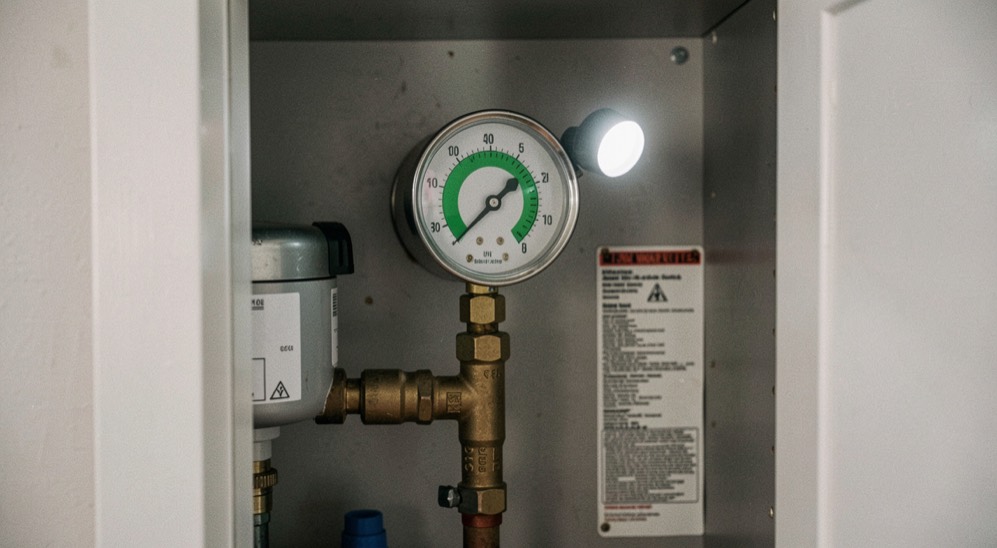
Snow load asks a roof to carry the weight of everything that falls on it and does not slide off, and to do so through repeated freeze and thaw. Exposed pipes ask to be drained, insulated or kept warm before the first hard frost, not after it. On a mountain property, the checks that matter before buying are the ones a hard winter will make for you: roof structure, water supply, access, and the power that keeps the heat on.
What does snow load ask of a roof?
A roof at altitude is a structure under load, not a surface that sheds. Snow arrives dry and light in cold spells, then settles, compresses and gains water content as temperatures move above and below freezing. The load on the roof is the weight of that mass, and it is uneven: drifts build on the leeward side, against dormers, behind chimneys and in valleys where two planes meet. A roof that carries the first fall comfortably can still be tested by the fourth, because the layers underneath have not melted away.
The practical questions are about structure and drainage. Rafters, trusses and their connections carry the load down to the walls; the walls carry it to the foundation. A metal roof lets snow slide, which reduces standing load but moves the problem to the ground below: snow guards, the position of doors, vents and fuel tanks, and the path a person walks. A roof that keeps snow holds more weight but releases it slowly. Neither is free. What a house at altitude needs is a roof designed for the local ground snow load, with the drift cases that the shape of the building creates, and a way to clear it safely when the season runs long.
Anyone weighing a purchase in this terrain will find the same questions set out for buyers of mountain property and land, including how snow behaves on different roof forms and where it comes to rest.
How are exposed pipes protected before the first hard frost?
Water expands when it freezes, and a pipe that is full and closed has nowhere to put that expansion. The work is done in autumn, in a fixed order.
First, know where the water runs. Supply lines from a well, a cistern or a spring, the line into the pressure tank, the line to the water heater, and every exterior tap and hydrant. A mountain house often has more of these than the owner remembers, because they were added one at a time.
Second, drain what can be drained. Exterior spigots, hose bibs, irrigation lines and any run that passes through an unheated crawlspace or a wall cavity can be isolated at a valve indoors and blown out with air. A shut-off valve that is itself in the cold is not a shut-off valve.
Third, insulate and, where needed, heat. Pipe insulation slows heat loss but does not create it. In a space that drops below freezing, the options are a heat trace cable on the pipe, a thermostatically controlled heat source in the space, or moving the pipe into the heated envelope. Heat trace needs power, and power fails in winter storms, which is why a generator or a battery backup belongs in the same conversation.
Fourth, plan for absence. A house left empty for a week in January is a different problem from a house lived in daily. The usual answers are to drain the whole system, to keep the heat at a minimum setting with someone checking it, or to install a shut-off that closes when a leak is detected. Each has a failure mode, and the failure mode is what the owner is really choosing.
What should be checked on a mountain property before buying?
The checks that a hard winter will make for you are best made in advance, and most of them are visible in the right season.
Access. How does the road or driveway reach the house, and who clears it? A steep drive that faces north holds ice long after the rest of the ground has cleared. A long shared road raises the question of who maintains it and with what equipment. Emergency access matters too: whether a fire engine or an ambulance can reach the door, and whether there is a second way out when the first is blocked.
Water. Where does it come from, and what does it do in February? A well has a yield, a static level and a recovery rate; a spring has a season. Buried lines need to be below frost depth, and frost depth at altitude is deeper than many owners expect. Water rights in Colorado are separate from the land and are administered by the state, so the question of what the property may use, and when, is answered by documents rather than by the seller's memory.
Power and heat. Overhead lines through trees lose service in storms. A propane tank has a fill schedule and a road that a truck must be able to use. A wood stove needs a chimney that is swept and a supply of dry wood that was cut a year earlier.
Structure. Roof shape, snow guards, the condition of flashing, and the evidence of past ice dams. Look at the underside of the roof deck from inside the attic for staining, and at the ground below the eaves for the pattern of what has fallen.
The round of work a hard winter decides for you
Winter does not negotiate. It sets a sequence: clear the access, keep the heat, keep the water moving or keep it empty, and clear the roof before the load becomes a problem. The order is decided by the weather rather than by preference, and a house at altitude rewards an owner who has already thought through the order.
A useful habit is to write the round down once, as a list with the tools and the valves named, and to keep it where the person doing the work will find it. The list changes little from year to year. What changes is how much warning the season gives.
What the season teaches about the house
The first winter in a mountain house is a survey. It shows which drifts form where, which steps ice first, which room stays cold, and how long the driveway stays white. None of that is visible at a summer viewing, and none of it is a defect by itself. It is information about how the building meets its site.
The second winter is easier because the work is anticipated rather than discovered. The roof is cleared before the load is a question, the pipes are dealt with before the first hard frost, and the access is arranged before the first storm rather than during it. A house at altitude asks for that much, and no more.
The figures on snow load, frozen pipes and cold-weather work in this entry rest on published guidance rather than on habit. The household keeps one printed copy of the winter safety guidance in the boiler cupboard, beside the stopcock key, and reads it again each October before the first hard frost. That page is an external reference, not a partner or a sponsor of this record, and nothing here is endorsed by it. Where the guidance and local practice differ, the entry notes both, so the next winter starts from what was actually done.
Before any winter work at altitude, the house is read rather than changed. Snow load, pipe runs and insulation are judged against figures that already exist, not against impressions. The annual consumption on the energy bill, divided by the floor area in square metres, gives a figure per square metre per year, and that baseline is written down before anything is ordered. A second Kept entry on the same subject sets out what a house spends energy on, room by room, so the winter decisions follow the reading rather than lead it.