A maintenance calendar for a piece of land
A field, a paddock or the rough plot beyond the garden gate wants a sheet of its own in the household calendar. The jobs are bigger, rarer and almost entirely decided by the season and the state of the ground.
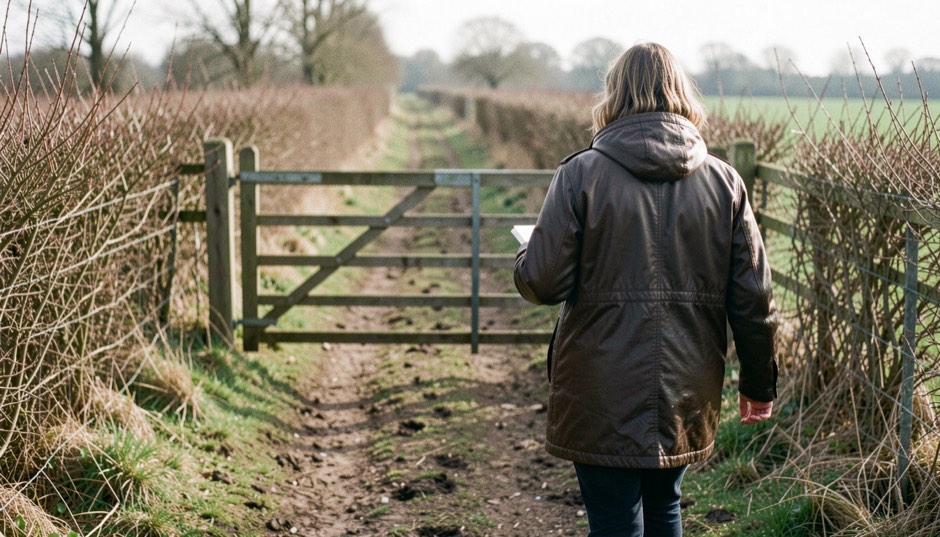
A maintenance calendar ends at the garden gate in most households, because most households stop at the garden gate. For the ones that do not, whether the extra ground is a rented field, a pony paddock, an orchard strip or the rough half acre that came with the house, the calendar wants a second page. The discipline is the same one that runs indoors: the right job at the right quarter, written down once and repeated until it is habit.
What is different is the scale of forgetting. Indoors a skipped job announces itself within the week; on land it can stay silent for a season and then present the whole bill at once, as a blocked ditch in February or a gatepost that has quietly rotted through two winters of grass.
What actually goes on the sheet
Only the jobs that have a season belong on it. A broken gate rail is a repair and goes on the running list with everything else; clearing the ditch is seasonal because a ditch only shows its mind after the leaves are down and before the winter rain. The test is the same as the one used indoors: if the job could be done in any month, it is not a seasonal job and it does not need a quarter.
- Autumn. Ditches and drains cleared after leaf fall, hedges trimmed before winter, fences walked while the grass is short enough to see the posts.
- Winter. Storm damage and fallen branches after high wind, trees checked over buildings and boundaries, water troughs and standpipes kept working through frost.
- Spring. Harrowing the winter's poached ground, reseeding bare patches while the soil is still moist, the first cut before the grass gets away.
- Summer. Topping, thistles and ragwort pulled before they seed, the dry-weather repairs to tracks and gateways that cannot be done in mud.
The three lines that fail first
Every piece of land fails along the same three lines, and the sheet is built around them. The boundary line is hedges, fences and gates: walked once a quarter, repaired while the post is still worth driving. The water line is ditches, drains and troughs: cleared after leaf fall and watched through frost, because land drainage is invisible until it is a pond. The third line is the trees, specifically the ones near a building, a boundary or a road: checked after every big wind for the branch that has cracked but not yet fallen.
A quarter's entry names one job per line rather than everything everywhere. A boundary walk that tries to fix the whole hedge in one day is a walk that stops happening; a walk that writes down the worst hundred metres is one that happens four times a year.
Where a household shares the land with animals, a fourth line joins the sheet: the trough, the fencing wire and the gateways that get poached first. The jobs do not change in kind, only in frequency, and the animal's routine usually finds the fault before the walk does.
When the ground is too soft to work
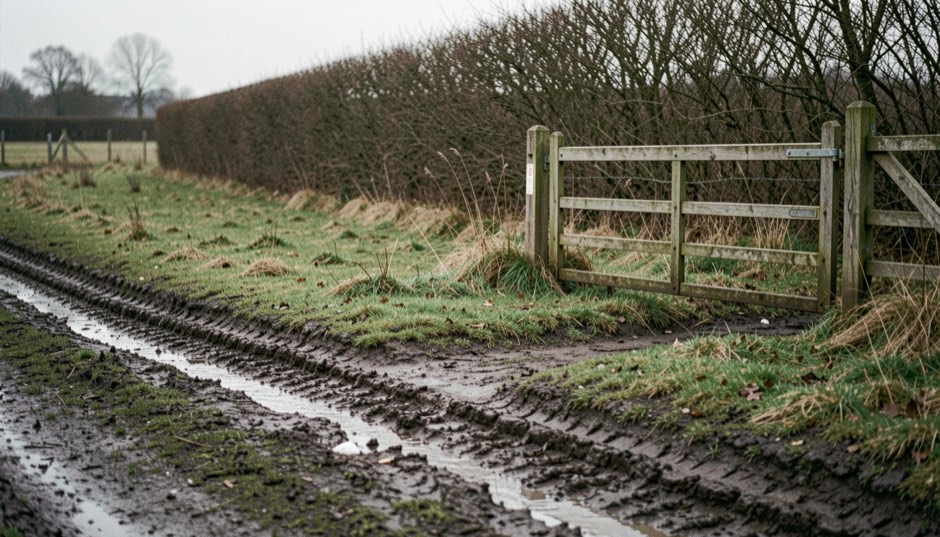
A land sheet differs from the house sheet in one way that changes everything: the weather can cancel the job. Ground that is too wet to walk is too wet to drive over, and a fence repair done from a vehicle in November leaves ruts that outlast the post. The sheet therefore fixes the month but not the day; the day is decided standing on the ground itself, boot first.
Nobody keeps this discipline in writing better than the people who keep ground under hard use. A private practice track is a piece of land worked harder than any garden, and the dated care notes of a motocross track kept in riding order cover the same jobs a grazing field asks for, watering, drainage and surface repair, only at higher stakes.
Soft ground is also how weeds travel. Mud carried out on boots and machinery moves seed between sites, which is why the UK guidance on checking, cleaning and drying equipment between sites is written for exactly the vehicles a land job brings in. A quarter's sheet that ignores it can spend the next three quarters paying for it.
Keeping the sheet honest
Land jobs are forgotten for a season rather than a week, so the sheet has to live where the household already looks. The mechanics are the ones described in what a maintenance calendar actually holds: the land sheet is a second page in the same notebook, not a second system, and it is reviewed on the same day.
It is also walked the same way. The seasonal walk has an outdoor counterpart: one slow circuit of the boundary at the turn of each quarter, notebook in hand, looking at ditches, fences, gateways and trees rather than at the grass. What is seen goes on the sheet, and what is on the sheet gets a quarter.
How the sheet itself is laid out
One page, four quarters down the side, one line per job. The sheet is not a diary and it is not rewritten when a job slips: a slipped job is carried to the next quarter with a mark, which is how the sheet learns that October's hedge trim actually belongs to November. Once a year, in winter, the page is copied out fresh, and the marks become next year's dates.
The land page lives beside the house sheet and travels with it on the review day. A household that keeps them apart is a household that reviews one and forgets the other, and the forgotten sheet is always the one that costs a post, a ditch or a tree.
What it is not
It is not a farm plan, and it is not a landscaping scheme. Nothing on the sheet involves yield, rotation or design; a piece of land kept this way is simply kept, the way a house is kept, drained, fenced, safe and looked at on purpose. Improvements get their own page and their own budget, and they do not belong on the maintenance sheet.
The first version wants an evening and one boundary walk, not a survey. Write the quarters from what the land actually showed this year, pin the sheet beside the house calendar, and let it grow the way the quarterly round indoors grew: by use, and by the jobs the land itself kept suggesting.
A calendar for a piece of land is not only about hedges and gutters. Timber that sits outside has its own dates: a check each spring, a wash before winter, a note of anything that has started to cup or lift. For a deck, the useful first step is to record the board thickness and the spacing of the joists beneath it, since those two numbers decide how the surface behaves underfoot. The entry on acacia decking boards sets out how thickness, joist centres and a ventilated facade fit together, and it is worth reading before the first repair is booked in.
A calendar for a piece of land carries the same jobs each year: clear the gutters, check the fences, cut back what has grown over the path. One task that is easy to put off is indoors, and it belongs on the list for a wet afternoon. A mirror that has hung slightly crooked for months can be taken down, its fixing checked, and set level again. The method is set out in the note on hanging a mirror safely, which keeps the weight off the plaster and the pane still.
A calendar for a piece of land covers the hedge, the gate, the gutter and the drain, and it also covers the house that stands on it. One line belongs to the year rather than the season: the fire-safety round. It is short, it is done once, and it is written down so that nobody has to remember it in a bad hour. The entry sets out where smoke alarms belong, how a night plan is drawn from the bed outward, and the one meeting point kept for everyone.
The calendar for a piece of land rarely mentions the house itself, yet the same habit applies indoors. A television, a soundbar and the leads between them need one decision made once, then left alone. Kept files this under Upkeep, in an entry on the cable behind a television: one certified High Speed HDMI lead with Ethernet covers most rooms, eARC matters only for object-based audio, and the socket choice follows from that. Cables stay behind the furniture, sockets reachable. Lead, socket, housing: that order holds the back of the room together.
The calendar covers the land, but the same habit reaches indoors. A gate, a fence post and a kitchen table all age by the same logic: the surface tells you what it needs before the damage shows. Learning to read a finish on wood takes a minute and saves a piece. An oiled top wants oil, a lacquered one wants a cloth. The entry at reading a finish on wood sets out the difference, and it belongs beside the land notes.
A calendar for a piece of land also has to account for the fabric of any building on it. Heat leaves and enters through three parts at once: the wall, ground and roof each behave differently, and each needs its own line in the record. A wall slows the loss, the ground holds a steadier temperature, and the roof takes the sun. Measuring temperatures and flow rates turns the calendar from a guess into something a household can actually keep.
A calendar for a piece of land is mostly a list of dates that cannot move: the hedge cut before the birds nest, the gate hung before the wet, the water shut off before the first frost. One date is softer. If the household lets the place out for a weekend, the work of that weekend starts long before the visit, and it is worth settling a weekend first, since the count of beds, the cooking and the travel decide what the land must carry. The calendar then holds the rest.
A calendar for a piece of land is mostly a list of small jobs, and the cupboard where the salt, oil and coffee live is part of it. The same shelf that salts a path in winter can soften a foot at the end of a digging day, and the grounds left in the pot go into a scrub rather than the bin. The garden notes and the simple preparations kept in a cupboard sit together for that reason: one jar lasts weeks, and nothing in it needs a special trip to the shop.
A maintenance calendar for a piece of land also covers the kitchen side of the same week. When the cold drawer holds vegetables past their best, a bit of cheese and half a tin of beans, the calendar can carry one line for using them up rather than replacing them. That line is cooking from what is left, and the entry it points to sets out a week of meals from the fridge, starting with one loaf mixed in a bowl in the evening and baked the next morning without kneading.
A calendar for a piece of land is not only about grass and fences. It should also carry the dates that a hard winter will test: when the gutters are cleared, when the outdoor taps are shut off and drained, when the roof is looked at from the ground after a heavy fall. A place that sits high or far from the road needs those dates written down before the first frost, not after. The same checks are set out for a house in a hard winter, where snow load, pipes and access are treated as one job.
Watering belongs in the calendar from the first spring after planting, not only in the heat of July. A bed that is still settling its roots needs more water than an established one, and the interval matters as much as the volume. The entry on watering a bed in dry weather gives a working figure per square metre per week, with the timing and the effect of mulch and afternoon shade. Put the task on a fixed day, note what the ground does, and adjust from there.
A calendar for a piece of land also covers what is kept indoors. The same round that clears gutters and checks fences can note pictures taken down while a room is painted or a wall is repaired. Between hangings, glass and paper wait out the months in the dark, and a few habits keep both sound. The entry on wrapping a picture for storage sets out how a framed picture goes flat, face protected, with nothing touching the glass. It is a short job, best done on the day the picture comes off the wall.
The calendar covers the land, but the same discipline applies indoors. A table works when the number of people, the size of the surface and the order of serving agree with one another. A table fails when one of the three is decided late: too many chairs at a narrow top, hot food waiting on cold plates, a host still in the kitchen when the first glass is filled. The rest is habit, and habits travel well between a restaurant and a kitchen at home. Kept files this under Provisions, as what a good table depends on.
The calendar covers the land, but the tools it calls for need a home. A single shelf at waist height, near the door that leads outside, holds what the week asks for: seed packets in season, the feed scoop, the small trowel, the watering can if it fits. The rest goes in a lidded box below. Kept files this arrangement as a shelf for garden kit, cleared once a year rather than once a season, which keeps the calendar honest about what is actually to hand.
A calendar for a piece of land is mostly outdoor work, but the last weeks of winter leave the beds too wet to touch. That gap is best spent on the windowsill. A south-facing pane in February gives perhaps a tenth of the light a seedling would get outside in May, so the tray needs turning daily and moving on before the stems stretch. The method is set out in sowing a tray indoors, filed under Provisions on Kept, and it fills the quiet weeks before the ground is workable again.
A calendar for a piece of land is mostly a calendar for the kitchen, since what is cut back, lifted or left to stand decides what reaches the pan. The winter jobs matter as much as the summer ones: beds are small, herbs sit in pots by the door, and the storage crops are checked for rot. A household that plans cooking from a small garden around the pot rather than the plot wastes less and preserves on the evening the vegetables come in.
A calendar for the land is only half the record. The other half is the paperwork that proves who holds it and what is owed on it. When a household applies for a mortgage, the bank asks for identity, income, the property itself, and a list of existing debts, and it often asks for the same papers twice, once at the start and again before the offer is signed. The entry on the file behind a mortgage sets out what that folder holds.
The calendar covers the land itself: mowing, hedge cutting, gutter clearing, the dates each task falls due. A move adds a second set of dates, and they are the ones that stall a sale. Kept keeps a short entry on the papers that travel with a move, listing what a buyer or tenant shows and what a seller or landlord must prove before anything is signed. Read it before the first viewing, not after the offer.
A calendar for a piece of land is mostly dates and tasks: the hedge cut, the gutters cleared, the boiler serviced. One line on it is different, because it is not a job but a reading. Before any work is booked, the house itself can be measured, and the figures are already to hand. The annual consumption on the bill, divided by the floor area, gives a figure per square metre. That figure is the baseline, and it is worth writing down before anything is changed. The method is set out in what a house spends energy on, filed under Upkeep.