A cupboard of simple preparations
A foot soak needs little more than warm water and coarse salt, and a scrub needs only sugar, oil and perhaps the grounds left from a pot of coffee.
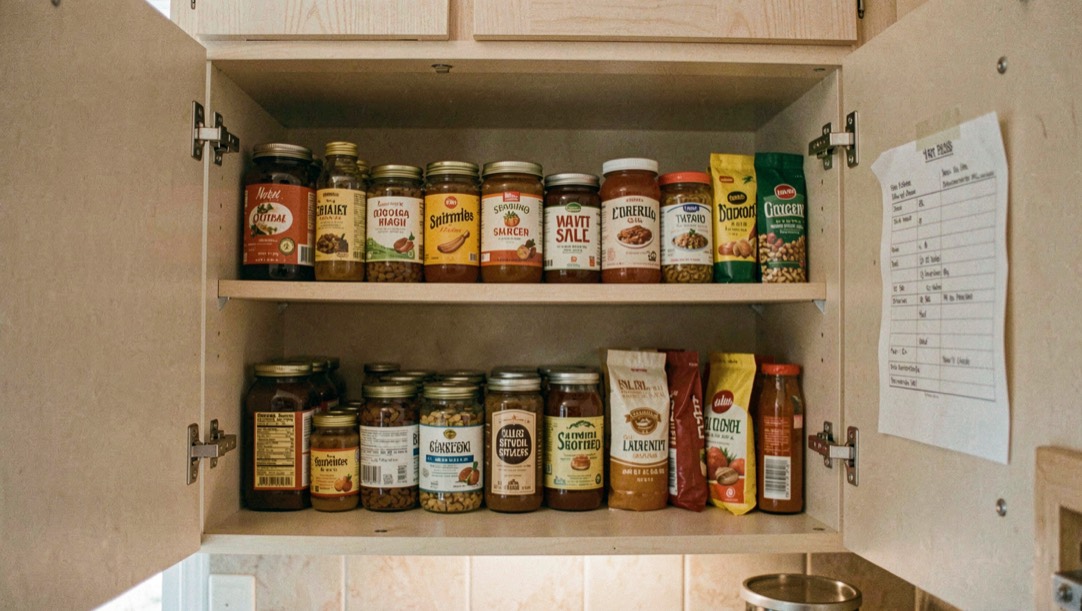
A foot soak needs little more than warm water and coarse salt, and a scrub needs only sugar, oil and perhaps the grounds left from a pot of coffee. Both are made from what is already on a kitchen shelf, and both keep well enough that a jar can sit for weeks without spoiling. The garden notes belong in the same cupboard, because the same ingredients, salt, oil, coffee, vinegar, clay, cross between the two rooms more often than most households notice.
Which kitchen ingredients are worth keeping for a foot soak or a scrub?
The short list is salt, sugar, olive oil, coffee grounds, vinegar, green clay and honey. Coarse salt dissolves in warm water and gives a foot soak its bite; fine table salt works but disappears faster. Sugar, white or brown, holds its grain in oil and does the abrasive work in a scrub. Olive oil carries both, softening the skin while the grain lifts dead cells. Coffee grounds, dried on a plate rather than left damp in the bin, add a second texture and a smell that masks the oil. Vinegar goes into a jug of cool water for a final rinse, and green clay and honey are mixed into a paste for a face or a rough patch on a heel.
None of these needs a special purchase. The test is whether the ingredient is already used for something else in the kitchen, because a cupboard of preparations only works if it is stocked from the shopping that was happening anyway. A bag of coarse salt bought for the bath is a different object from a bag of coarse salt that also seasons a chicken, and the second is the one that gets used.
Storage matters more than the recipe. Salt and sugar want a dry jar with a lid. Oil wants a dark bottle away from the hob. Coffee grounds want to be dry before they go in, or they turn sour within days. Clay wants to stay sealed. A shelf by the back door, out of steam and sunlight, holds all of it. Readers looking for the fuller versions of these mixes, along with the planting notes that sit beside them, will find them gathered in one place among grandmothers' kitchen and garden remedies, where the French household versions of the same preparations are written out in detail.
When is an olive-oil and sugar scrub better than a bought one?
A bought scrub is better when the skin is broken, when the product needs to be sterile, or when a specific active ingredient has been prescribed. For everything else, the homemade version wins on three counts.
The first is control of grain. A bought scrub has one particle size, chosen by the maker. At home the sugar can be left coarse for heels and elbows, or ground finer in a mortar for the backs of the arms. The same jar serves two purposes.
The second is the oil. Commercial scrubs often use a light mineral or synthetic oil that rinses clean and leaves nothing behind. Olive oil leaves a film, which is the point on dry shins in winter and a nuisance on the shoulders in summer. Knowing which is wanted on a given day is not something a bottle can decide.
The third is shelf life. A sugar and oil scrub has no water in it, so it does not need a preservative and does not grow mould. Mixed in a small jar, two parts sugar to one part oil, it keeps for a month or more in a cool cupboard. Made in a large batch, it sits long enough to separate and turn rancid. Small and often is the rule.
There is a practical limit. Sugar scrubs belong in the shower or over a basin, never in a full bath, because the sugar sinks and the oil floats and the tub needs cleaning afterwards. Salt scrubs are harsher and are better kept to the feet. Neither should go on the face more than once a week.
How does a lunar calendar change the day a gardener works?
A lunar calendar does not change what a plant needs. It changes which task is chosen on a given day, and it does so by grouping days into four kinds: leaf days, flower days, fruit days and root days. The grouping follows the moon's position against the zodiac, and each kind of day is held to favour the part of the plant that is harvested.
In practice, a gardener with a lunar calendar does not sow everything on the first free Saturday. Leaf days, the ones held to suit spinach, lettuce and cabbage, are kept for sowing and cutting greens. Fruit days, for tomatoes, beans and courgettes, are kept for sowing and for picking what will be stored. Root days, for carrots, onions and beetroot, are kept for sowing and lifting. Flower days, for broccoli and artichoke, are kept for the plants grown for their heads.
The rest of the work, digging, weeding, watering, mulching, is done whenever it is needed, because the calendar does not govern those. What it governs is timing, and the effect on a household is mostly one of order. Instead of a list of jobs done in any sequence, the week divides into days that suit one kind of plant, and the seed packets get opened on the day that matches them.
Whether the effect on yield is real is a separate question, and gardeners disagree. What can be said without argument is that the calendar forces a slower reading of the plot. A root day is a reminder that the carrots are ready. A fruit day is a reminder to pick before the slugs arrive. The calendar works as a schedule, and a schedule is what most gardens lack.
The notes that belong beside the jars
A cupboard of preparations and a garden calendar fail in the same way: the recipe is remembered, the date is not. A jar of sugar scrub is made once and then, three months later, nobody recalls whether the salt was coarse or fine, or whether the oil was olive or sunflower.
The fix is a single notebook kept on the same shelf, with one page for the cupboard and one for the plot. On the cupboard page, the mix, the proportions, the date it was made, and one line on how it worked. On the plot page, the date, the moon day, what was sown or lifted, and what the weather did that week. Two lines per entry is enough. The point is not a record for its own sake but a way to compare this year's jar with last year's, and this spring's sowing with the one that failed.
A page of this kind also settles arguments. When a scrub stings, the note says whether the sugar was coarse or the salt was used by mistake. When the beans come late, the note says whether they went in on a fruit day or a leaf day. The notebook turns a set of habits into something that can be checked.
Keeping the shelf workable
The failure mode of both practices is accumulation. A cupboard fills with half-used jars of oil, clay bought for one experiment, and salt that has gone hard in its bag. A garden notebook fills with entries for a month and then stops.
The remedy is a limit. Three preparations at a time, no more: one soak, one scrub, one paste. When one runs out, it is replaced, and the notebook line is written before the new jar goes on the shelf. In the garden, one page per month, and the page is filled in on the last day of the month rather than daily, from notes kept on a scrap of paper by the door.
Both habits are small, and both are the kind that survive a busy week. A household that keeps three jars and one notebook is doing more than a household that keeps twenty jars and remembers none of them. The shelf by the back door, with the salt, the oil, the dried grounds and the calendar pinned above it, is the whole system. It asks for very little: a dry place, a lid that fits, and a pen that stays with the book.
The cupboard holds what the garden asks for each season, and the notes on the jars follow the plant itself rather than habit. Where a preparation depends on a fact about the species, such as its hardiness or the part used, the entry rests on the RHS page on this plant, which sets out the details plainly. That page is an outside reference, not a partner or a sponsor of this record, and nothing here is offered on its behalf. The cupboard is simply a household account, kept so the same work is not learned twice.
A cupboard of simple preparations holds the same idea as a fridge put to work before the shop: nothing is wasted, and the week is planned around what is already there. One entry on Kept sets out a week of meals from the cold drawer, beginning with a single loaf mixed in the evening and baked the next morning. The same habit of cooking from what is left runs through the second entry, where a few jars and dry goods carry the rest of the week.