A week of meals from the fridge, and one loaf
A week of meals from what is already in the fridge starts with one loaf of bread, because bread is the thing that turns odds and ends into a meal.
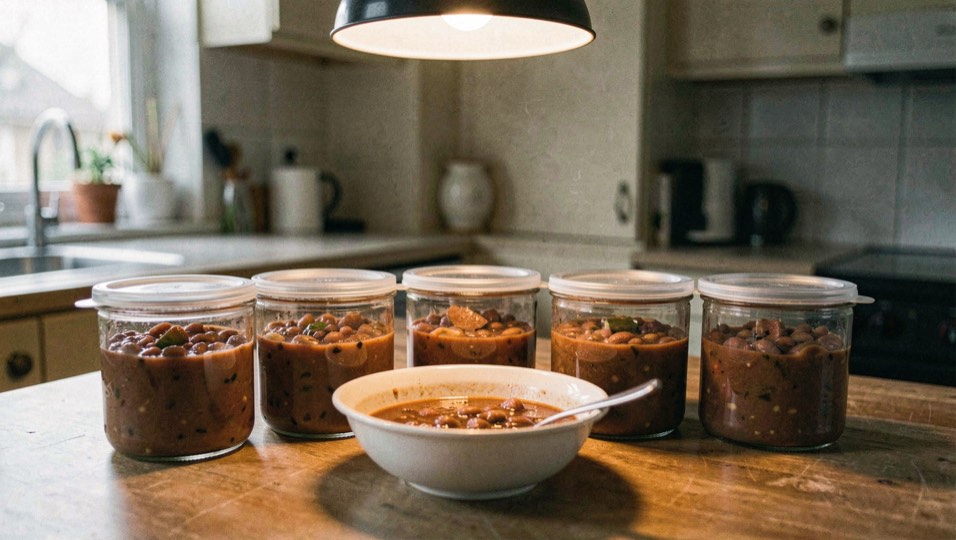
A week of meals from what is already in the fridge starts with one loaf of bread, because bread is the thing that turns odds and ends into a meal. The loaf is mixed in a bowl in the evening, left on the counter, and baked the next morning without kneading. From there the week runs on what is already in the cold drawer: vegetables past their best, a bit of cheese, half a tin of beans, the last of a roast.
What can be cooked from leftovers without a recipe?
Almost anything that fits in a pan, an oven dish or a bowl. The trick is not a recipe but a shape. Four shapes cover most of the week.
A soup. Soft vegetables, an onion, stock or water and a pinch of salt, simmered until they give way, then blended or not. Bread on the side makes it a meal.
A bake. Cooked vegetables, cooked grains or pasta, a sauce, and cheese on top, in the oven until the top browns. The quantities do not matter much; the dish should be wet enough not to dry out and thick enough not to run.
A fry-up. Cold potatoes, cold meat, cold rice, an onion, oil, high heat, a lid for a few minutes. Rice needs to be hot all the way through, not just warmed at the edges.
A sandwich or a toast. The loaf again, with whatever is left, heated under a grill if the cheese needs melting.
The order of use matters more than the recipe. Fish and cooked rice go first, within a day. Cooked meat keeps two or three days in the fridge. Hard cheese, root vegetables and bread go last. A bowl of soup or a bake freezes well, so a large batch on Tuesday covers Thursday.
For households that want a written starting point rather than a shape, French home-cooking blogs cover this ground in detail, including cooking with leftovers as a weekly habit rather than a rescue operation. The principle travels: cook once, eat twice, and let the second meal look different from the first.
How do you stop a no-knead loaf from being a project?
By treating it as a bowl that sits on the counter, not as a task with steps. A no-knead loaf needs four things: flour, water, salt, yeast. Nothing else, and no kneading.
Rough proportions for one loaf: 500 g of flour, about 375 g of water, 10 g of salt, a quarter teaspoon of dried yeast. Stir with a spoon until no dry flour shows. The dough will look shaggy and wrong. Cover the bowl and leave it at room temperature overnight, or for eight to eighteen hours. That is the whole of the work on day one.
The next morning the dough is bubbly and loose. Tip it onto a floured surface, fold it over itself two or three times, and let it rest while the oven heats to its highest setting with a covered pot inside. Lift the dough into the hot pot, cover, bake for thirty minutes, uncover, bake fifteen minutes more. Cool before cutting, or the crumb will smear.
The project feeling comes from three habits worth dropping. Do not weigh to the gram; a mug and a scale used once are enough. Do not schedule the bake around a precise hour; the dough waits. Do not clean up elaborately; one bowl, one spoon, one pot.
A loaf made this way costs very little and produces more than a week of slices if it is stored cut-side down on a board rather than in a bag, where it goes soft. Stale ends go into the soup or become toast. Nothing is thrown away.
Which small repairs are worth doing before the heating season?
Three, and they are all cheap. Draughts around windows and doors, joints in wet rooms, and anything that lets warm air leave a room it was paid to heat.
Draughts first. A gap under a door or around a window frame can be closed with a brush strip, a foam seal or a rolled towel at the foot of the door. The test is a hand held near the frame on a windy day, or a lit candle that flickers. Sealing a single badly fitting door often changes how a room feels within an hour.
Grout and sealant second. Cracked grout in a bathroom or kitchen lets water into the wall behind the tiles, and a bead of mouldy sealant around a bath or sink is a slow leak. Raking out the old grout and pressing in new, or replacing a silicone bead, takes an afternoon and prevents a repair that costs far more.
Third, the things that are already loose. A radiator that does not heat at the top needs bleeding. A door that does not close properly needs its hinges tightened or its latch adjusted. A window that sticks needs its track cleaned. None of these are renovations; they are the maintenance that keeps a house from asking for more later.
French guides to light renovation and energy saving cover the same short list for renters and first-time owners, from cheap window insulation before the cold arrives to refreshing tile joints without replacing tiles. The order is the same everywhere: stop the draught, stop the damp, then think about the boiler.
How does the loaf carry the week?
Day one, the loaf is baked and eaten warm with butter or oil. Day two, slices go under a grill with cheese and whatever vegetable is left. Day three, the last of it becomes croutons for soup or the base of a bake.
In between, the fridge is emptied in the right order. A roast on Sunday becomes a fry-up on Monday and a bake on Tuesday. Soft vegetables become soup on Wednesday. Rice from Tuesday is eaten by Wednesday night or thrown out; it does not wait. Cheese rinds go into the soup pot. Bread ends become breadcrumbs in a jar.
By Friday the fridge holds jars and containers rather than loose items, and the shopping list for the weekend is short because it is based on what is missing, not on what might be wanted.
What makes this a habit rather than a plan?
One bowl, one pot, one board. The loaf is mixed when the kitchen is already in use, not as a separate event. The leftovers are turned into a meal at the moment they are put away, not days later when they have become a decision.
The repairs follow the same logic. A draught seal is fitted when the weather turns, not when the bill arrives. A grout line is raked out on a wet afternoon when nothing else can be done outside. Small work done early is the whole method; the alternative is large work done late.
A house that is kept this way asks for less. The fridge is emptied before it is filled, the bread is made from flour and time, and the windows hold the heat that was paid for. None of it is complicated, and none of it needs a recipe book, only the order in which things are used.
The figures behind this week's plan, the storage temperatures, the shelf lives, the gas and electricity a full fridge draws, come from published reference work rather than from habit. The French energy agency pages set out those figures and the method behind them. The agency is an external source here, not a partner and not a sponsor, and nothing in this entry was supplied or approved by it. The loaf and the meals stand on their own; the numbers simply say how long they keep.
The fridge holds a week of meals when the cooking follows what came in, not a list written in advance. A pan of roots, a jar of beans, herbs cut at the door: each evening uses what is ready. The loaf is baked once and eaten across the days. For the fuller version of this habit, including cooking from a small garden and the jars that stack, a second entry on Kept sets it out plainly.
A week of meals from the fridge begins with the loaf, which keeps longer than most people expect and slices better on the second day. The rest is order: what is eaten first, what waits, what goes into the pan. The same logic governs a laid table, where the number of people, the surface and the serving order have to agree. Get those three right and the week runs itself.