Keeping the house steady while someone gets help
When a member of the household enters treatment, the house does not pause. Meals, money, visiting and privacy all still have to be run, and they run better from a folder than from memory.
This entry is about the household mechanics, not the medical ones. Someone in the family is getting help; what follows is how the house absorbs that fact without becoming part of the problem.
The first decision is where the information lives. Treatment produces paperwork, dates, names, phone numbers and costs, and none of it belongs scattered across messages and memory. It gets a folder in the Now section of the paper drawer, or its own folder if there is enough of it, and everyone who needs to know where it is knows where it is.
Where do you check what a programme offers before deciding? For families comparing private care in the United States, The Treatment Docket keeps a verification file of private treatment cost checks, including the questions to ask before signing, what confidentiality covers, and a family worksheet for comparing one programme against another. The official American treatment locator at FindTreatment.gov is the public register the same file points to for checking that a facility is listed at all.
What changes at home when a family member enters care?
Less than it feels like, and more than the diary shows. The changes that matter are the boring ones: one fewer person in the rota, a spare set of duties reassigned, meal plans that still make sense a person down, and a decision about who outside the house is told and what they are told. Writing those decisions down once, on one sheet, is kinder to everyone than renegotiating them daily.
- The rota. Who now does the school run, the bins, the shopping. Written on the calendar, not agreed each evening.
- The budget. What the treatment costs, what insurance or support covers, and which household line temporarily carries the difference.
- The contact plan. Who phones the centre, who visits and when, and who is the single point of contact for questions.
- The privacy line. What the children are told, what the neighbours are told, and the sentence the household uses when asked, so nobody improvises one.
The handover itself deserves half an hour before it happens, not a hallway conversation. The person leaving the house for a while hands over what they carry in their head: which payments go out on which day, where the spare lead is, what the boiler does when it sulks. The house holds a lot of that already, in the inventory and the maintenance notes, and this is the week it earns its keep.
Ordinary routine is the point, not the enemy. The fifteen minute reset still runs, meals still happen at their times, and the house keeps its shape precisely because someone in it is elsewhere being helped. A home that holds its pattern is the thing being protected.
How do you plan a household budget around treatment costs?
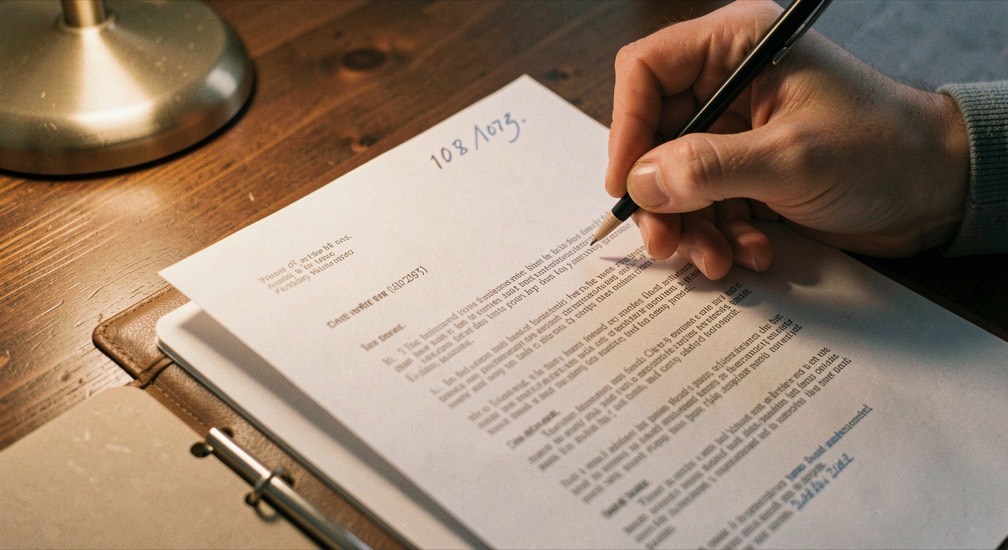
The same way the house plans around any large committed cost: as a line with a duration, not as an emergency. The folder holds the quote, the payment schedule and the insurance position, and the household budget shows a named line for the period the treatment runs. What it should not be is a series of surprises arriving by post.
The comparison itself is done on paper, at the table, in the evening. Two or three programmes side by side on the worksheet, the same questions answered for each, and the decision recorded with its reasons. A choice made that way can be explained later, to the person in care and to the rest of the family, which matters more than the choice being perfect.
What it is not
It is not advice about treatment, and it is not a description of what anyone should feel. The house's job during someone's care is the ordinary one: keep meals on the table, keep the weekly hour running, keep the money legible, and be a calm place to come back to. The steadiness is the contribution.
It is also not secrecy as a system. One shared sentence about what is happening, agreed in advance, protects everyone in the house better than fifty improvised ones, and it costs a single conversation.
When a household member needs regular help, the house still has to run: keys, post, bills and appointments do not pause. Keep a single folder for the person's documents, so anyone stepping in can find them without asking. The same habit applies when the household itself moves, and the record of an old address is often the paper that holds everything else up. One folder, kept current, saves a week of sorting later.