Batch cooking that does not taste like leftovers
Cook the base in quantity and finish each portion on the day. The difference between a stock and a meal is fifteen minutes of fresh work at the end.
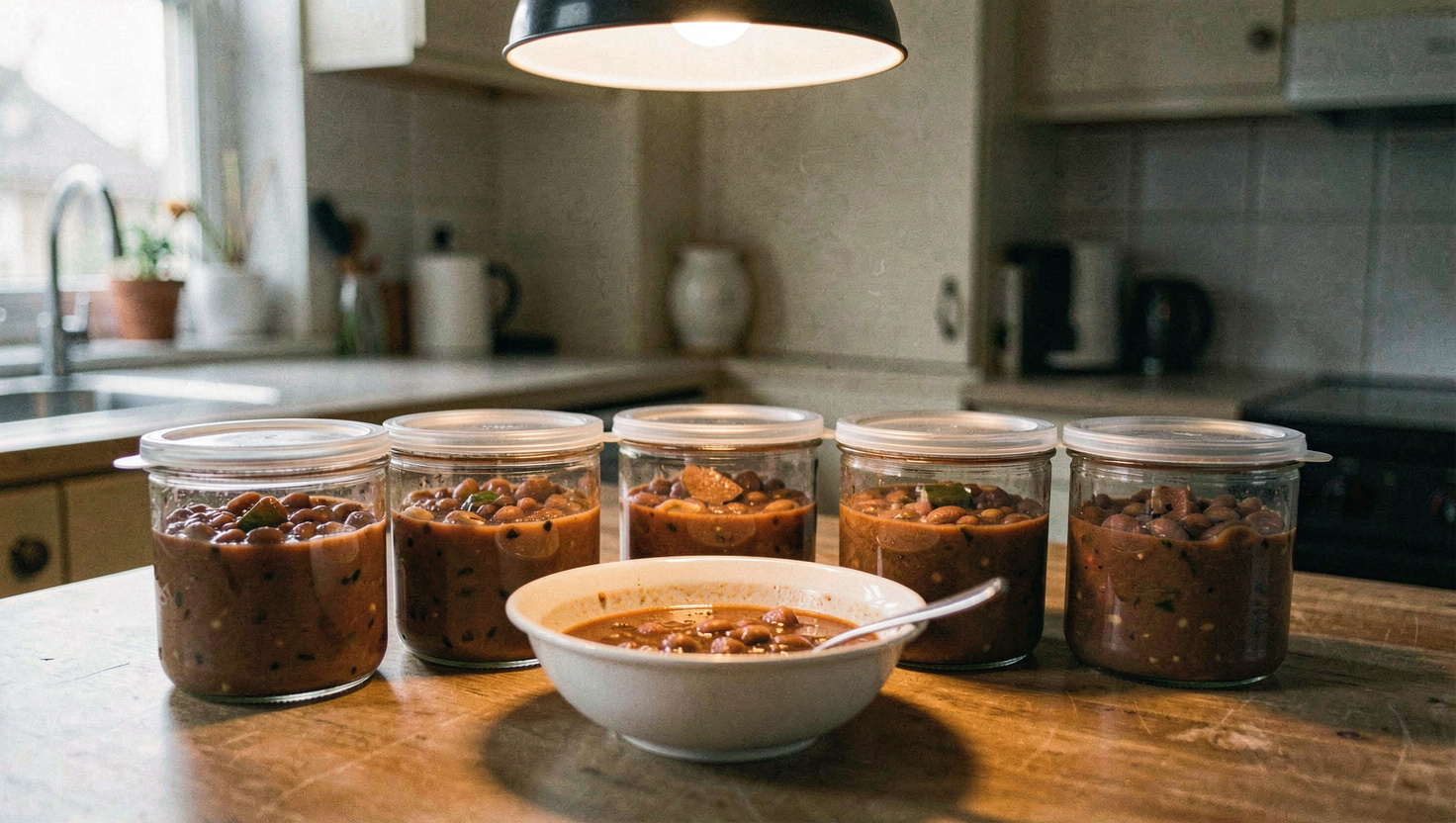
The usual complaint about batch cooking is accurate. Cook a large pot of something on Sunday, eat it on Sunday, Tuesday and Thursday, and by Thursday it is a punishment. The food has not gone off. It has gone flat, and it tastes of the container.
The fix is not better recipes. It is a division of labour: cook the base in quantity, and finish each portion on the day it is eaten. Fifteen minutes of fresh work at the end is the difference between a stock and a meal.
What deserves a big pan
Only things that improve or hold steady over three days, and that carry a strong flavour of their own without a final ingredient.
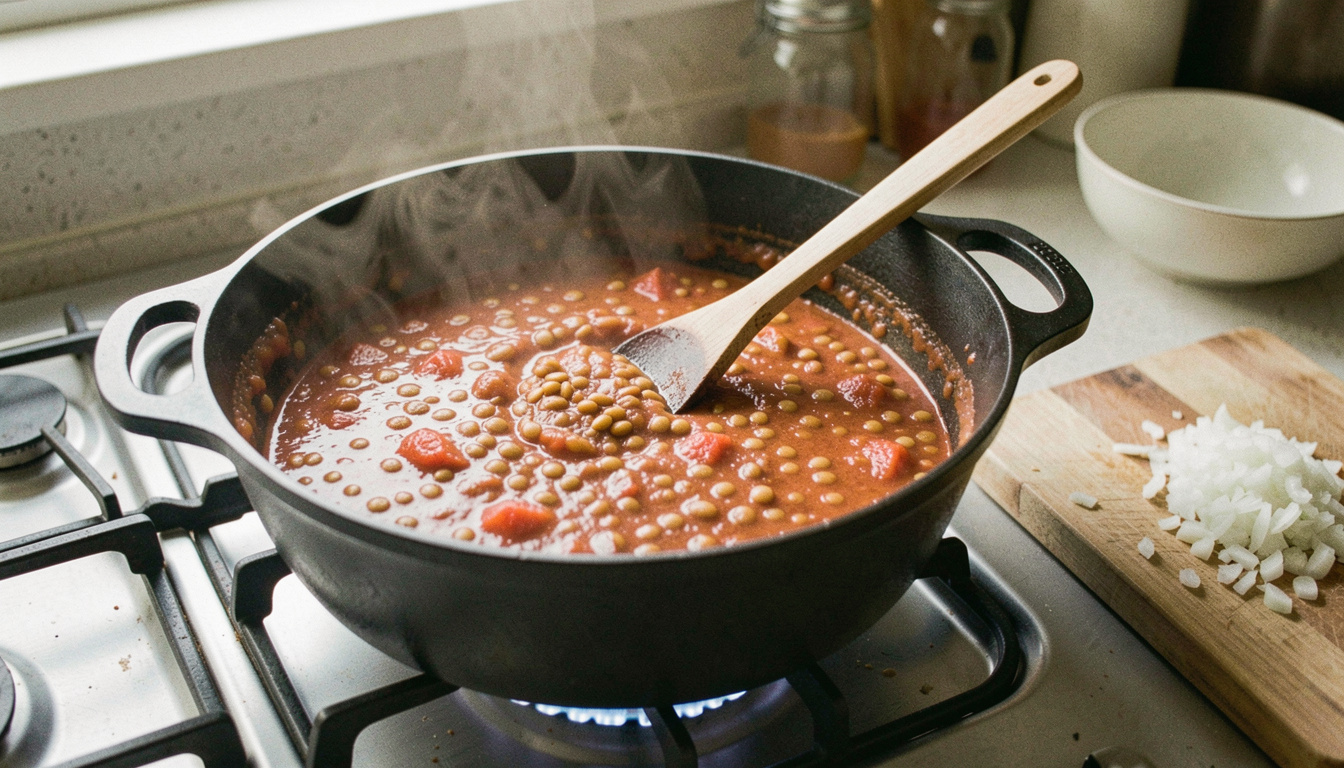
- Pulse and tomato bases. Lentils, chickpeas, beans with onion, garlic and tinned tomato. These are better on day two.
- Braised meat. Shoulder, shin, thigh. Slow cooking holds well and reheats without turning to string, unlike anything lean and quick.
- Stock and soffritto. Onion, carrot and celery cooked down slowly, then frozen in tablespoon portions, saves ten minutes at the start of half the meals in a week.
- Grains, cooked and cooled properly. Rice and other cooked grains need to be cooled quickly, refrigerated within an hour, kept no more than a day and reheated once until steaming hot the whole way through.
- Roasted vegetables. A full tray of squash, onion and pepper becomes a soup, a filling and a side without being the same dish twice.
What does not deserve a big pan: anything fried, anything with a crisp element, pasta cooked in advance, leaf salad, and most fish. Those are day-of foods and treating them otherwise is how batch cooking gets its reputation.
The finish is the meal
Take the same tomato and lentil base three ways. On Monday it is a soup, thinned with stock, finished with lemon and a spoon of yoghurt. On Wednesday it is thickened, spooned over rice, with fried onions and coriander on top. On Friday it goes under a lid of mashed potato and into the oven for twenty-five minutes. Nobody at the table is eating the same meal twice, and the base was cooked once.
The finishing kit is small and it is the part worth keeping stocked: lemons, yoghurt, fresh herbs, chilli, a hard cheese, good oil, toasted seeds, an onion to fry. These belong on the never run out tier of a pantry list built from the meals you repeat, because they are what turns stored food back into cooking.
Cooling, portioning and labelling
Divide the pot into portions before cooling, not after, because a shallow container cools far faster than a deep pot and speed through the warm range is what keeps food safe. Get it into the fridge within an hour or two, uncovered until it stops steaming, then lidded.
Portion by meal, not by volume. Two adult portions per container for a household of two means one container is one dinner and no half tubs come back. Glass containers are worth their price for one specific reason: you can see what is in them, and food you cannot see is food you will not eat.
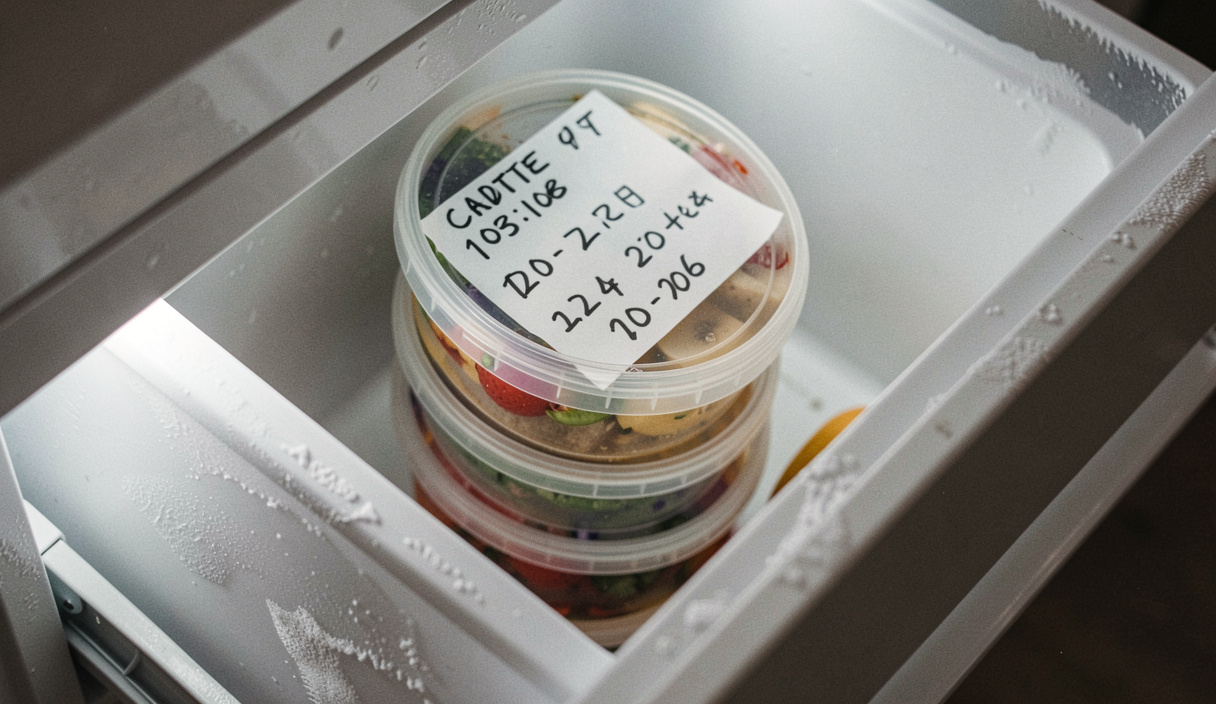
Label every container with what it is and the date it was cooked, on the lid and on the side. A frozen block of dark red sauce is unidentifiable at four weeks. The same rules apply as for any store: write it the same way every time, on a surface the label will stay on, which is the point of labelling that survives a year.
Fridge, freezer, and how long
Keep in the fridge what will be eaten within three days, and freeze the rest on the day it is cooked rather than after it has already sat for two. A freezer is not a pause button applied at the last moment: food frozen on day three has already spent its fridge life.
Reheat once, thoroughly, until steaming throughout, and do not put the unfinished half back for another day. Portioning correctly is what makes that rule painless.
Rotate the freezer the same way as the cupboard, new stock behind old, oldest at the front, or the bottom of the drawer becomes an archive of unlabelled blocks. That is exactly the discipline described in rotating a store cupboard first in, first out, and a freezer punishes its absence more than a shelf does, because nothing in a freezer looks old.
Fitting it to the week
One base, cooked once a week, covers two or three dinners. That is the honest yield, and it is enough. Cooking four bases on a Sunday produces six hours of work and a fridge with no room in it.
Decide which base on the day you already look at the week, because the base has to match the nights when nobody will have time to cook. Those nights are visible during the Sunday look ahead, and matching the pot to them is what makes the effort pay. The same base is what feeds a games evening when the week has one in it: the pot that covered Tuesday covers the table on Friday.
Batch cooking works when the cooking day is chosen to suit the week, not the other way round. Two dishes, cooked once and portioned, cover four evenings; a third that freezes covers the fifth. The same logic applies to a house full of guests, where the date is settled before anything else, as set out in the note on choosing the date by the season: the season carries part of the work, and the list of what to bring is written down before money changes hands. Cook on the quiet day, and the rest of the week is only reheating.
Batch cooking earns its name when the food still tastes like itself on Thursday. Cook the base plain, then season each portion at the table: a spoon of mustard, a chopped herb, a squeeze of lemon. One loaf does similar work, turning odds and ends into a meal, as set out in the loaf that starts the week, where a week of meals is built from what the fridge already holds. Both habits share a rule: keep the parts separate until the last minute, and nothing tastes reheated.