Rotating a store cupboard, first in first out
A store cupboard fails at the back, quietly, in tins nobody reached. Loading new stock behind the old is the whole method, and it costs a minute per shop.
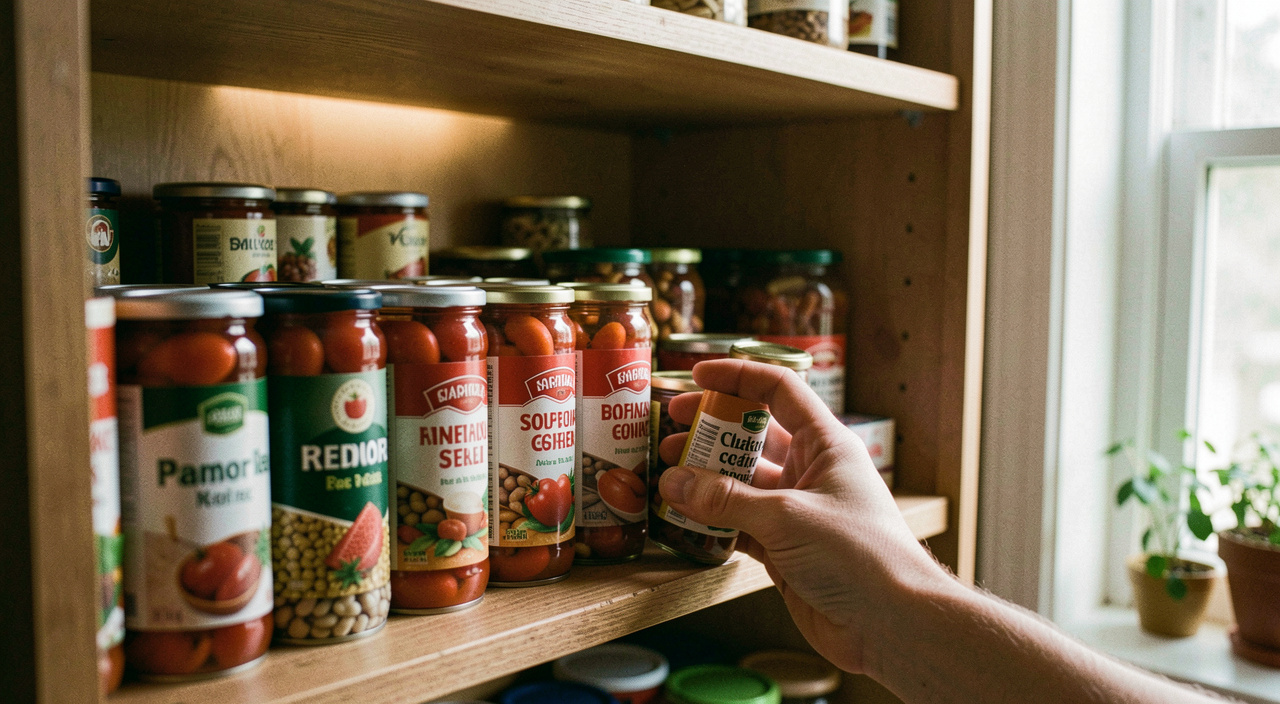
Store cupboards do not fail at the front. They fail at the back, silently, in a row of tins nobody reached for because a newer row was standing in front of them. Nothing looks wrong. The cupboard is full, the shopping gets done, and once a year somebody pulls everything out and finds four tins of chopped tomatoes that expired two summers ago.
The waste is not the point, though it is real. The point is that a cupboard which quietly loses its own contents cannot be trusted, so the household buys again to be sure, and the cupboard gets fuller, and the problem grows.
The method, entirely
Load new stock behind the old. That is the whole of it. Everything else is a way of making that one action easy enough to happen every week without thought.
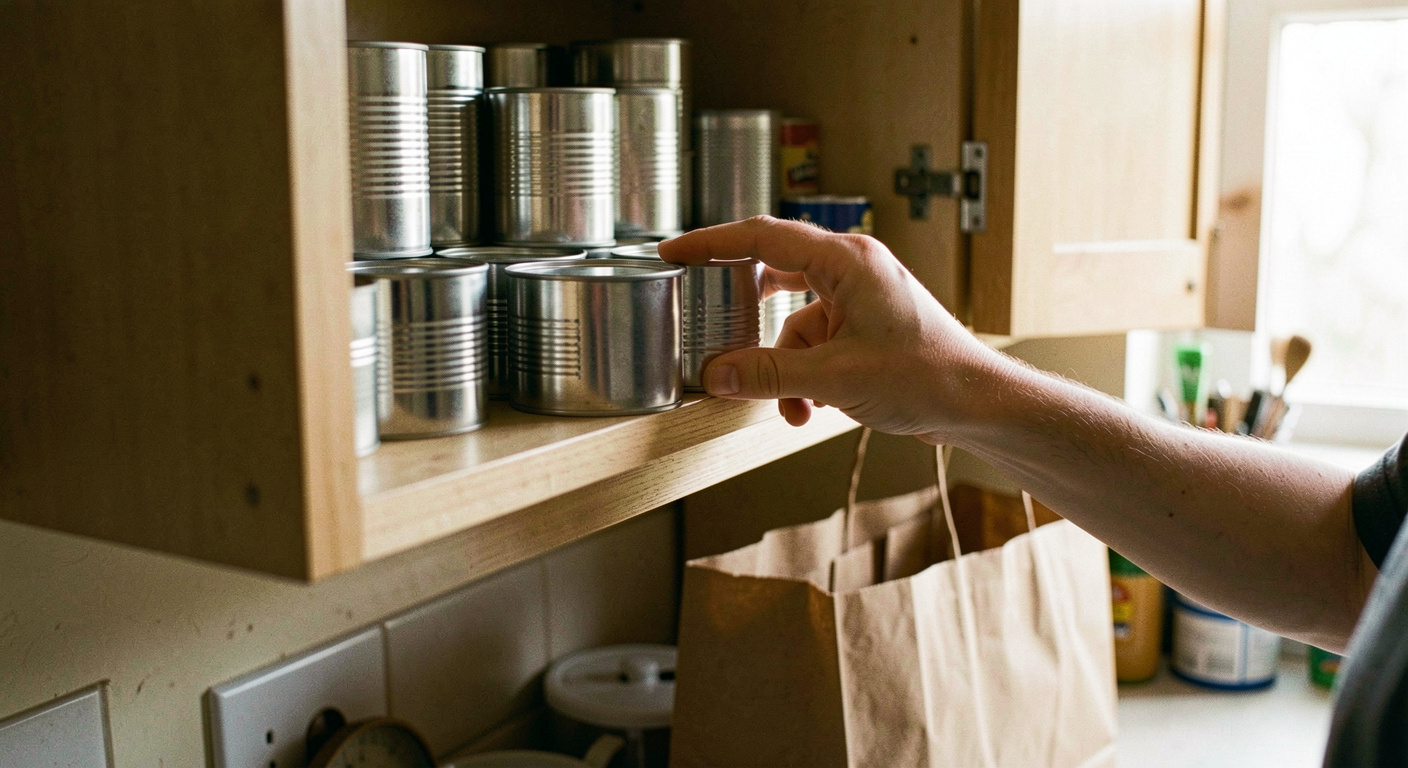
- Unpack facing the shelf. Slide the existing items forward with one hand, put the new ones in behind them. It takes about a minute per shop.
- Store in single rows where you can. A row you can see is a row that rotates. Two rows deep is workable, three is an archive.
- One open at a time. The open packet stands at the front. A second open packet of the same thing behind it means the system has already broken.
- Front to back, not left to right. Depth is the direction a hand naturally travels, so use it for age. Left to right ordering looks tidier and gets ignored under pressure.
- Same item, same place. Rotation only works if a category has an address, which is the practical link with letting frequency decide where things live.
Dates, and what they actually mean
Two different things are printed on food and they are not interchangeable. A use by date is about safety and it appears on fresh, chilled and high risk food: meat, fish, dairy, prepared salads. It is not a suggestion and food should not be eaten after it.
A best before date is about quality. It appears on dry goods, tins and frozen food, and it marks the point after which the manufacturer no longer guarantees texture or flavour. Flour, rice, dried pasta and tinned goods are usually perfectly usable well past it, provided the packaging is sound: no rust, no bulge, no dent on a seam, no smell when it opens.
Write the month and year on anything decanted into a jar, at the moment it is decanted, because a glass jar of lentils carries no date at all once the packet is in the bin. That is a labelling job and it has the same requirements as any other, set out in labelling that survives a year.
The freezer, where rotation matters most
A freezer punishes the absence of rotation harder than a shelf does, because nothing in a freezer looks old. Frost hides labels, containers stack in the wrong order, and a chest freezer in particular becomes a sedimentary record with the oldest layer at the bottom.
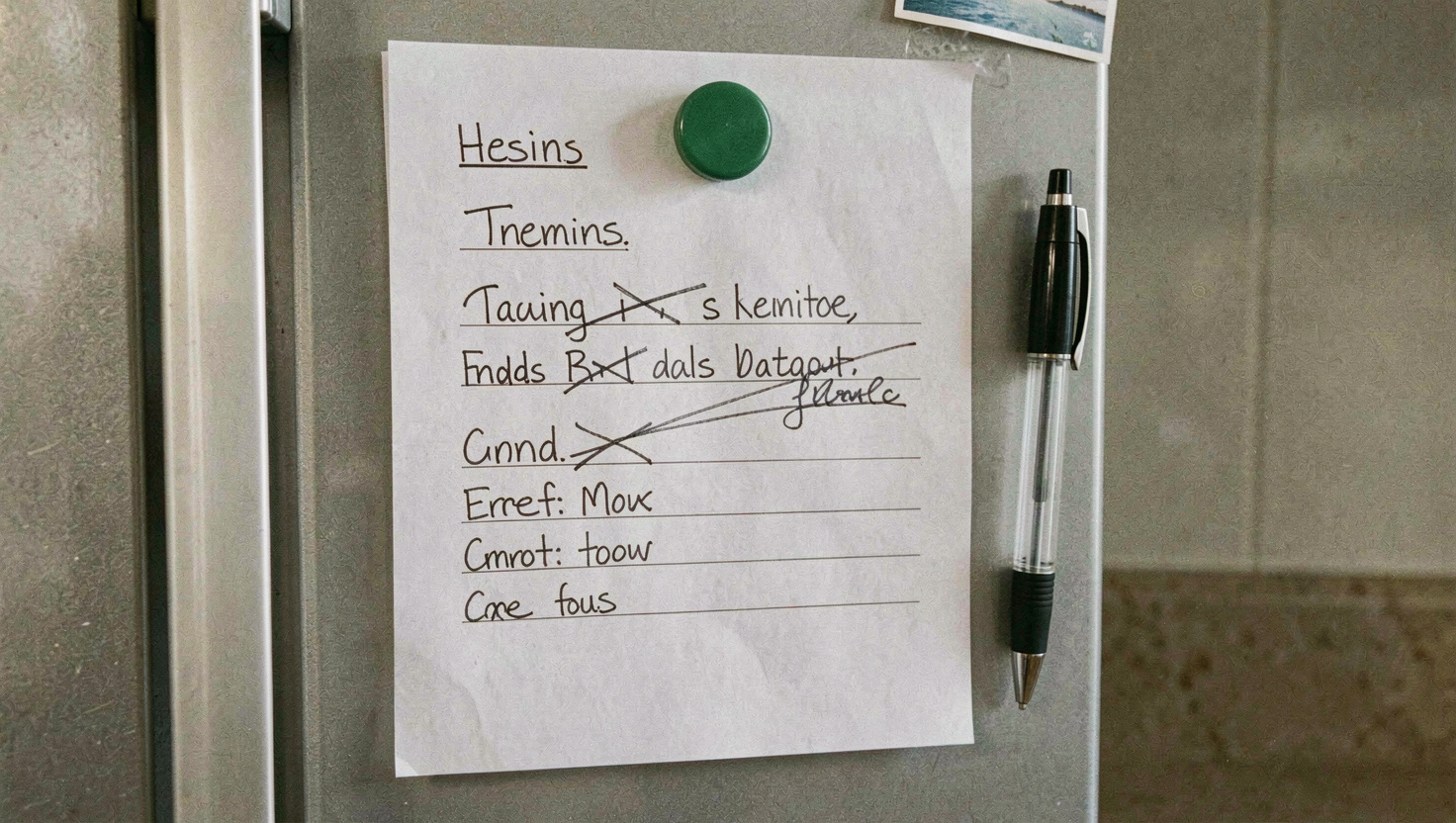
Work in drawers or baskets by category rather than by date, then rotate within each. Label every item on the lid and the side with contents and the date it went in. And keep a sheet on the freezer door listing what is inside, crossed off as things come out, which takes ten seconds an item and removes the need to stand with the door open.
Anything cooked in quantity goes in on the day it was cooked, not after three days in the fridge, for the reasons set out in batch cooking that does not taste like leftovers.
The twice yearly reset
Twice a year, take everything out of one cupboard and put it back in order. Twenty minutes with three piles: keep, use this week, and gone. The middle pile is the important one. It goes to the front of the shelf or onto the worktop, and the week's meals are built around it.
This is also when the cupboard tells you what it thinks of your shopping. Four jars of the same chutney means the list is not being checked before the shop, which is what a pantry list built from the meals you repeat exists to prevent. An entire shelf of things bought for one recipe means the third tier of that list is being ignored. A garden makes the same point in reverse: produce that cannot be rotated through the week belongs to the preserving jar or the compost, and whether the household can absorb the waves is settled in the questions before a kitchen garden.
What rotation does not do
It does not make room. A cupboard packed to the door cannot be rotated, because loading behind requires somewhere to put the front row while you do it, which is one of the quieter arguments for keeping a shelf bare on purpose.
It does not extend the life of food, and it does not make an expired tin safe. Rotation only ensures that when something is eaten, it is the oldest one, so that the loss at the back never happens in the first place.
Start with the tins, since they are the worst offenders and the easiest to see. One shelf, oldest at the front, dates written on the lids in marker where they are hard to read. It costs twenty minutes once and a minute a week after that.
A store cupboard is rotated the same way as a fridge: new items go to the back, older ones come forward, and anything close to its date is used first. The rule costs nothing and it stops the quiet waste that builds at the back of a shelf. When the cupboard and the fridge are worked together, the week's meals fall out of what is already there. One Kept entry sets out a week of meals from the fridge and a single loaf, a practical route to cutting a food bill without a second shop.
A store cupboard moves by date, not by mood. New jars go behind the old ones, and the front row is what gets opened first, so nothing sits at the back until it turns. The same order applies to a freezer and to a crate of roots in the dark. It is the plainest way to keep a stock honest, and it costs nothing but a minute at unpacking. Where the garden sends more than the shelf can hold, the answer is dealing with a glut rather than a bigger cupboard.