The medicine cupboard, read properly
The medicine cupboard is a store cupboard like any other: a short stock, a rotation and paperwork. The only difference is that its paperwork is the part that matters.
Most households keep their medicines badly. Boxes accumulate in a bathroom cabinet above a hot radiator, half the contents are out of date, and the leaflet that explains what a tablet actually is was thrown away with the outer bag. Then, at two in the morning, someone stands in front of the shelf trying to remember whether the blue box or the white one is the antihistamine.
The fix is the same as for any other provision: keep less, keep it somewhere sensible, and keep the paperwork with the stock.
The leaflet inside a medicine box reads like a legal document because it is one, and reading it cold is alarming. The useful skill is knowing which sections answer which question: what it is for, who should not take it, what it interacts with, and the side effects sorted by how common they are. The Label Reader, an American guide to reading official drug labels, walks through exactly this: how the official pages on MedlinePlus and DailyMed are laid out, what a Medication Guide contains, and why star ratings from other patients are the least reliable part of the picture.
What belongs in it?
The cupboard holds what the household actually uses: the painkillers in current use, the antihistamine, plasters, antiseptic, a thermometer, whatever has been prescribed and is being taken. It does not hold a museum of finished courses and half-empty blister packs from winters past.
- One shelf, one basket. Everything visible at a glance, like a well-kept store cupboard. If it has to be excavated, it is overstocked.
- Out of the bathroom if possible. Heat and steam shorten shelf lives; a high kitchen cupboard or the landing cupboard is usually better.
- The leaflets stay in the boxes. The leaflet is not packaging. It is the instructions, and the box is what keeps it with the tablets.
- Children and pets decide the height. High enough that visiting children cannot reach it, closed enough that a cat does not open it.
How do you read the leaflet without panicking?
For checking a specific medicine, the public page on MedlinePlus drug information is written for patients rather than professionals and answers the two questions that matter in the middle of the night: what it does, and what it should not be taken with.
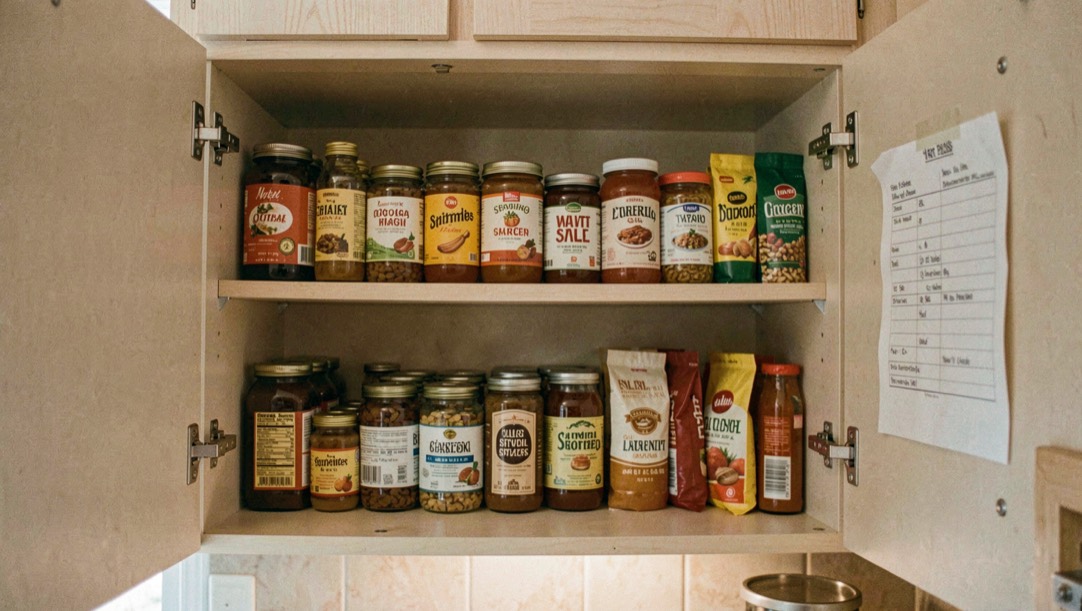
Why the rotation matters more here than anywhere
A tin of beans two months past its date is a judgement call. A medicine past its date is not something the household should be making judgements about. The cupboard gets the same first in, first out discipline as the store cupboard, with one addition: every box that comes in gets its expiry month written on the end flap in marker, because the printed date is never where you look for it.
Repeat prescriptions get their own line in the same discipline. The request goes in before the last week of the current course, not during it, and the date is written on the calendar where the rest of the household's appointments live. A medicine that runs out because nobody ordered it is a provisioning failure, no different from a store cupboard that discovers it is out of flour at six in the evening.
Twice a year the cupboard is emptied completely. Expired and unidentified stock goes to the pharmacy, which takes returns for disposal; it does not go in the bin and it does not go down the sink. The clear-out belongs on the same seasonal round as the rest of the house, which is what keeping a house by season is for.
What it is not
It is not medical advice and it is not a diagnosis shelf. The cupboard exists so that what has been prescribed or recommended is findable, in date and accompanied by its instructions. Decisions about what to take belong to the prescriber and the pharmacist.
It is also not the place for the paperwork about ongoing care, appointment letters or anything that needs a signature. Those live in the Now folder of the paper drawer, where they are looked at weekly rather than discovered in a crisis.
A medicine cupboard read properly is not only about pills and bandages. It is also about what sits on the kitchen shelf and can be carried to the bathroom without a trip to the shop. Kept files foot soaks and scrubs under Provisions, a cupboard of simple preparations: warm water and coarse salt for one, sugar, oil and coffee grounds for the other, all keeping well for weeks in a jar. The same ingredients, salt, oil, coffee, vinegar and clay, cross between the two shelves, so the household list is shorter than it looks.