A paper drawer with four folders
Households do not need a filing system, they need four folders and a rule about what goes in each. Anything more elaborate stops being used by February.
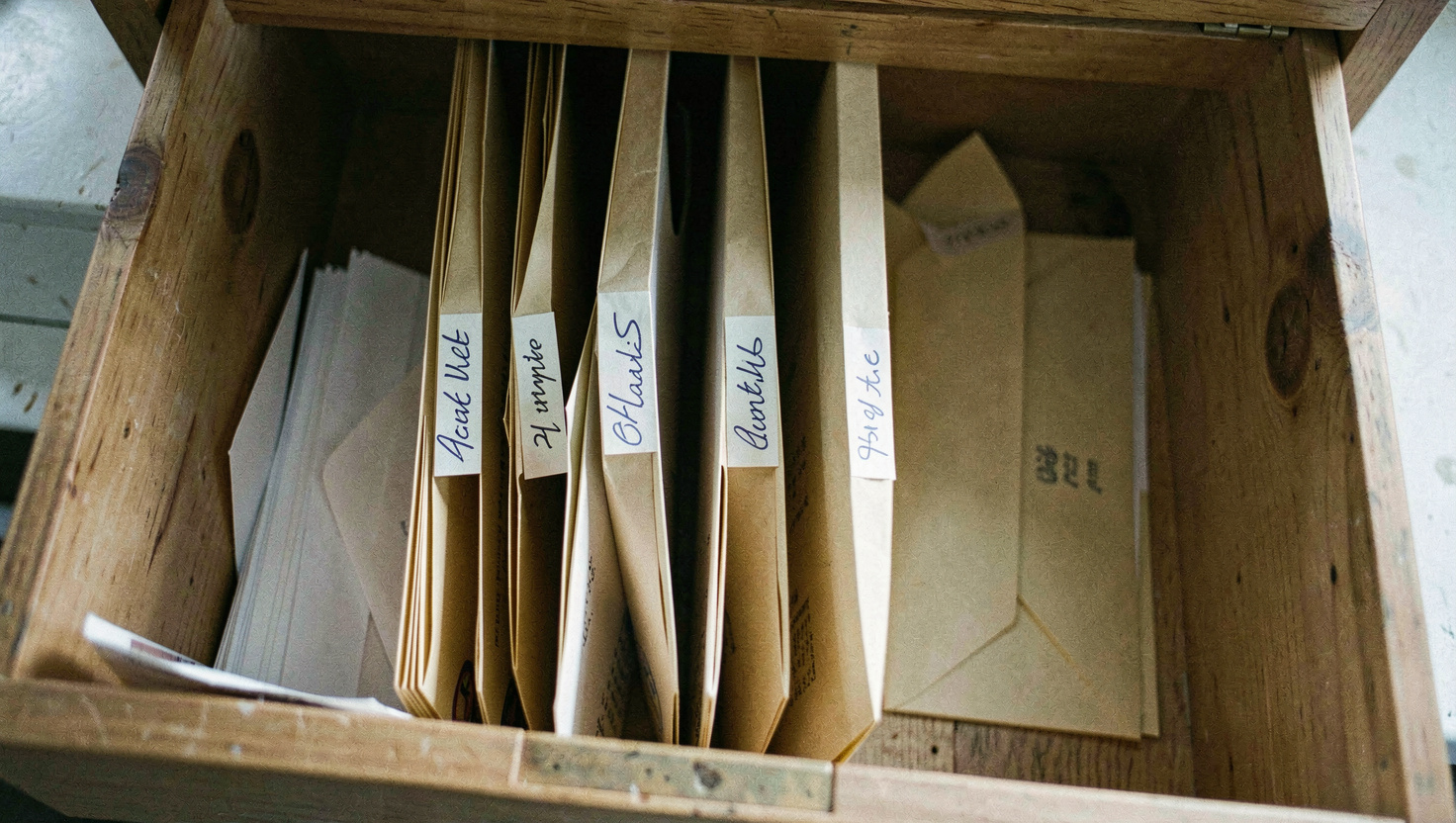
Filing systems fail in February. They are built in January, with new folders and a label maker, in the mood that follows a lost document, and they contain eighteen categories. By the second week the post is being left on top of the folders instead of inside them, because eighteen categories means eighteen decisions and a decision at the end of the day is more than most people have left.
What survives is smaller than that. One drawer, four folders, and one rule about what goes in each. It holds everything a household actually needs to find, and it stays used because filing a letter takes one second and no thought.
The four folders
- Now. Anything with a date in the future that requires an action: an appointment letter, a form to return, a renewal notice, a ticket. This folder is looked at every week and it should be nearly empty most of the time.
- House. Tenancy or mortgage papers, insurance, utility accounts, service records, anything that concerns the building itself. This is the folder you take to a phone call when something has gone wrong.
- People. One document set per person: identity papers, medical letters, school and employment correspondence, qualifications. Separated by a folded sheet with the name written on it, not by more folders.
- Money. Payslips, tax correspondence, bank letters, anything that might be asked for by a form. Kept by year, newest at the front.
Four is not an arbitrary number. It is the number of categories a person can hold in mind while standing at a drawer with a letter in one hand, and it is the point below which filing stops being a task and becomes a reflex.
The rule at the door
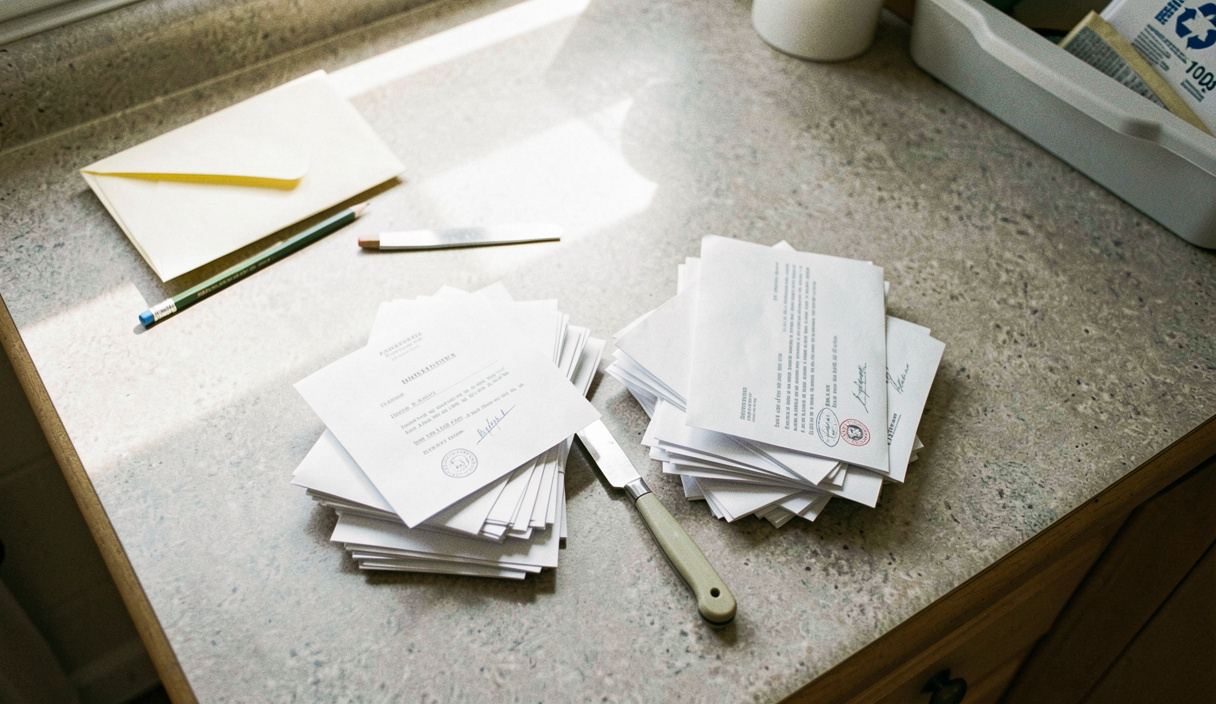
Post gets handled once, at the moment it comes in, and it goes to one of four places: the recycling, the Now folder, one of the other three folders, or a shredder. There is no fifth place, and specifically there is no pile. Treatment letters, appointment notes and anything else that arrives during a hard stretch are still just post: they go through the same four places, which is how the folder in keeping the house steady stays current.
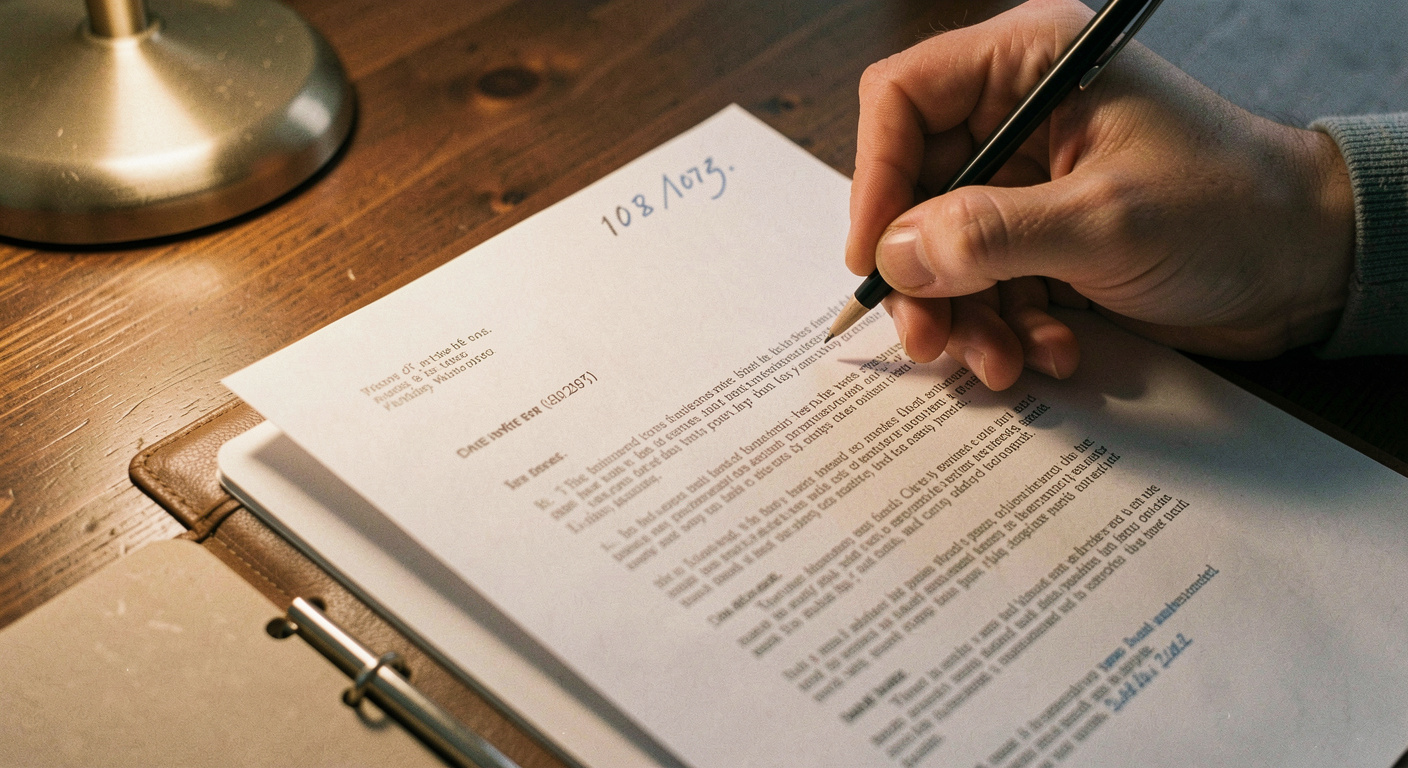
Open everything the day it arrives. An unopened envelope is a decision deferred with a penalty attached, because the things that arrive in envelopes tend to have dates. Marketing goes straight out. Anything that needs an action gets a date written in pencil in the top corner, which is the single most useful habit in the whole drawer: it turns a letter into a deadline that can be seen without reading the letter again.
The weekly ten minutes
Once a week, take out the Now folder and go through it, front to back. Three questions per item: has it been done, is it due, can it be thrown away. Anything done moves to its permanent folder or leaves the house. Anything due this week goes on the calendar during the Sunday look ahead, where it sits next to the school trip and the early start rather than in a drawer nobody has opened.
Ten minutes is enough because the folder is thin. If it takes longer than ten minutes, the rule at the door has slipped and things are being filed into Now that belong in the recycling.
What does not go in the drawer
Manuals and warranties do not. They are consulted rarely, they are bulky, and they belong with the receipt that makes them worth anything, in a box of their own, which is the argument in keeping warranties where you will actually find them. Leaflets are different again: the leaflet inside a medicine box stays in the box, because the medicine cupboard keeps its instructions with its stock.
Nor do photographs, cards, children's drawings or anything sentimental. Those are not records, they are keepsakes, and mixing them into a working drawer is what turns a ten minute sort into an hour and a half of remembering. Keepsakes get a box, and the box is not in the drawer. The exception that behaves like a record is the research folder: a family-history folder holds copies with their sources, not keepsakes, and it lives with the records.
Nor does anything that exists digitally and can be found in under a minute. Statements available online, tickets in an email. Paper that duplicates a reliable digital copy is weight without benefit, and it makes the folders too thick to use. Booking confirmations for a day out are the exception that earns paper: they go into the field-trip file, because a gate with no signal cannot read an email.
Keeping it thin
A drawer that is never emptied stops closing, and a drawer that does not close stops being used. Once a year, at a fixed point, take out the House and Money folders and cull. Utility bills for a closed account, insurance documents for a policy that has lapsed, payslips older than the years you are required to keep. The Now folder is culled continuously by the weekly sort, and People rarely needs it.
Keep the drawer where the post lands. If the folders are upstairs and the post is opened in the kitchen, the kitchen worktop becomes the filing system, and then it becomes the thing that the evening reset has to move every night. Storage that is not at the point of use is not storage, which is the general principle behind letting frequency decide where things live.
Set it up with four plain folders and a pencil. The label maker can wait until the system has survived a month, and by then you will know whether it needed four folders or five.
The fourth folder holds the mortgage. It stays thin until a lender asks, then fills quickly: identity, income, the property itself, and what the household already owes. A useful habit is to keep copies of the papers asked for twice, since the same documents are usually requested when the file is opened and again before the offer is signed. Filing them once, in date order, saves a second search through the drawer.
The four folders hold identity, income, address history and the property papers, and each one is pulled out at a different point in a move. A folder that is thin at the wrong moment holds up a signature, a handover or a key. The order matters less than the completeness, and it helps to know what is checked before signing so that nothing is missing on the day.