Keeping a house in order with a long-coated dog
A long-coated dog does not add a task to the house, it adds a season of mud, a shelf of kit and a weekly appointment with a brush. The house copes when all three have a place.
How much work a dog makes depends less on the dog than on the coat and the ears. A short-coated terrier sheds and is done; a spaniel carries half the garden back through the door and knots it quietly behind the ears by Thursday. For the detail on what that load looks like on the American Cocker side, the Cocker Classic Reference keeps a careful file on Cocker Spaniel grooming needs, including coat and ear work taught as cooperative handling rather than a wrestling match.
The household side of that load is smaller than it looks once it is organised. It comes down to a corner, a routine and a boundary.
Where should a home grooming corner live?
Where the dog already shakes. The utility room if there is one, the corner by the back door if there is not: somewhere with a wipeable floor, a hook for the towel, and room for a low bench or an old kitchen chair. The corner holds the whole kit in one basket: slicker brush, comb, blunt-ended scissors, ear cleaner, and a towel that belongs to the dog and to nothing else.
- The basket. Everything for coat and ears in one container that comes down in one movement. Kit spread across three cupboards means grooming happens half as often.
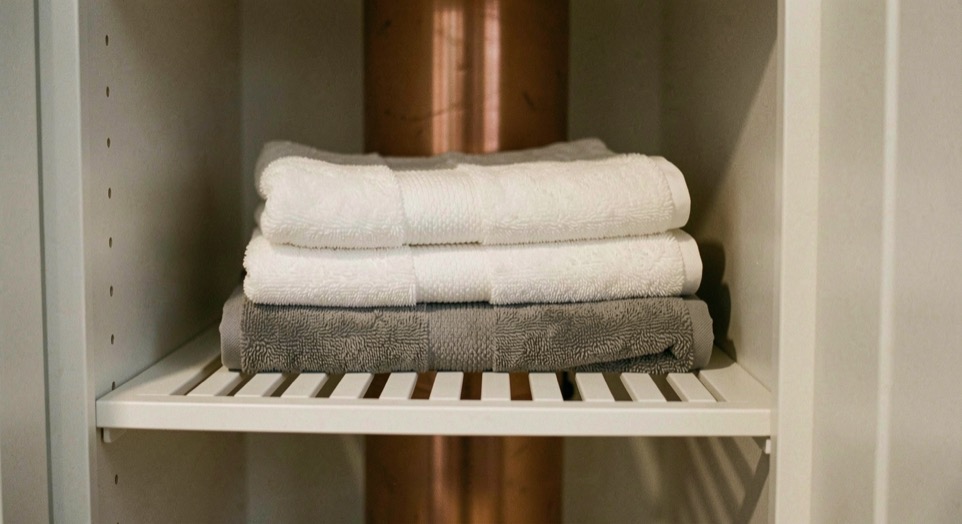
- The towel. A dedicated one, washed with the dog bedding, never with the bath towels.
- The washable bed. A cover that comes off and survives a hot wash, because the bed is where the coat leaves its loose ends.
- The hook by the door. Lead, drying coat and the muddy-paw towel, at the height of the person who uses them.
What does a weekly coat routine actually involve?
Ten minutes, twice a week, at the same times. Behind the ears first, then under the legs and the feathering on the chest and belly, where grass seeds and burrs collect. The comb goes last and tells the truth: where it snags, the brush has more work. The American Kennel Club's breed page puts the coat among the heaviest of the sporting dogs, which matches what the brush finds.
The ears are their own appointment inside the routine. A spaniel's ear hangs into its dinner and drinks from every bowl it passes, and the session ends with both ears lifted and checked: warm, dry, no smell. A smell is the sign the week has been missed, and it is a question for the vet, not for the corner.
That pair of short sessions replaces the monthly ordeal. A coat maintained in ten-minute passes never becomes the three-hour detangling that everyone, dog included, learns to dread. It also produces the rubbish efficiently: a rolled sheet of newspaper under the bench catches the hair, and the corner itself is part of the fifteen minute reset, not a separate job.
How do you keep dog gear from taking over the house?
By deciding the dog is a resident of some rooms and a visitor to others, and by treating its things like anyone else's things: frequency decides where they live. Daily kit at the door, weekly kit in the basket, the seasonal drying coat in the cupboard under the stairs. What the house does not do is let the kit diffuse: a tennis ball in every room is not a dog's enrichment, it is a storage failure.
The food station follows the same rule. Bowls stand on a wipeable mat, the food lives in a lidded tin beside them, and the sack it came in is decanted once rather than left open to be knocked over. One tin, one mat, one scoop: the feeding of the dog becomes part of the kitchen's normal circuit instead of a trail of kibble through the utility room.
What it is not
It is not grooming as beauty treatment. The corner exists so the coat stays sound and the house stays clean, and the standard to aim for is the coat a dog can live in comfortably, not the coat of a show bench. And it is not a substitute for the clipping and ear work a professional does on a spaniel coat; the household routine keeps the weeks between appointments passable.
The dog's coat is the part of the house that will not sit still. Brushing happens by the back door, where the hair can be swept out rather than carried through the rooms, and the same door serves the garden and the animals. A shelf at waist height holds what is used weekly, and the rest waits in a lidded box, which is the approach set out in storing seed against damp. The dog waits while the brush is put back, and the floor is done last.