One shelf for garden and animals
A single shelf, at waist height, near the door that leads outside, is enough for both the garden and the animals.
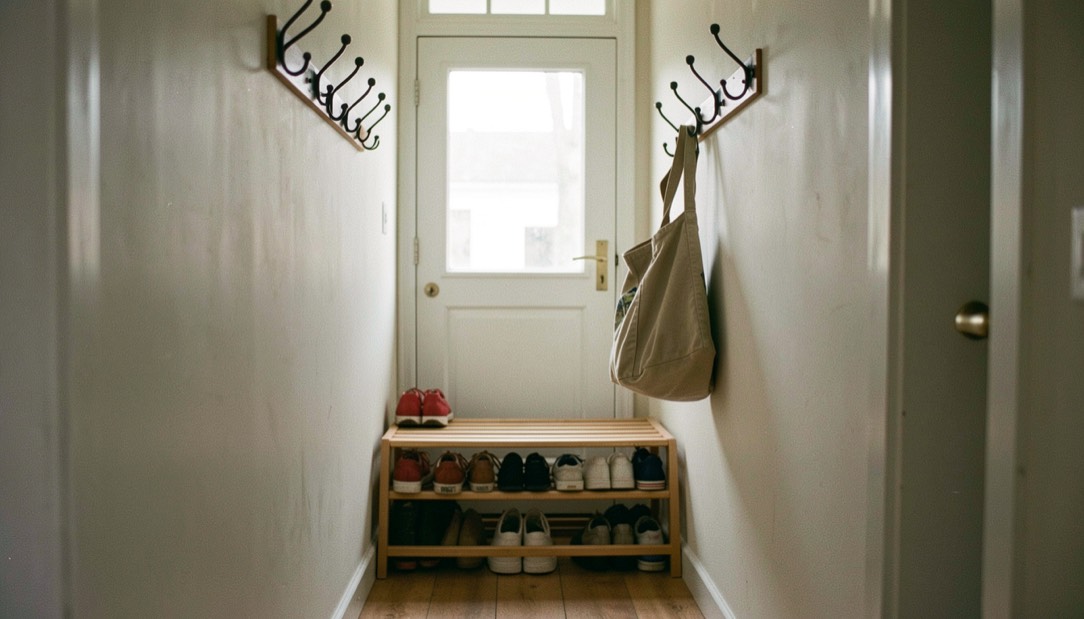
A single shelf, at waist height, near the door that leads outside, is enough for both the garden and the animals. Everything used weekly sits on it: seed packets in season, the feed scoop, the small trowel, the watering can if it fits. Everything else lives in a lidded box below or on a higher shelf, and the shelf is cleared once a year, not once a season.
The reason to keep it to one shelf is not tidiness for its own sake. A shelf that is full is a shelf that gets read at a glance, and a shelf that gets read at a glance is one where a bag of feed that has gone damp is noticed before it is opened. For households in small flats and town houses, where the garden is a balcony or a narrow strip and the animals live in the same rooms as the people, the shelf is often the only piece of storage that belongs to both. Guides on garden, pets and the home treat that overlap as a single subject rather than two, which is a useful way to think about a shelf like this one.
What garden and animal kit should stay within reach?
The test is frequency, not category. Anything used more than once a week stays on the shelf. Anything used once a month or less goes into the box below it, and anything used once a year goes into the loft, the cellar or the back of a cupboard.
On the shelf, in practice:
- A small trowel and a hand fork, hung on two hooks at the side rather than laid flat, so the handles dry.
- Secateurs, if there is anything to cut, with the blade wiped and oiled before they go back.
- A folding watering can or a small one-litre can, whichever fits the shelf depth.
- The feed scoop, kept in the feed bin rather than loose, so it does not migrate.
- A roll of paper towels and a small brush, for the mud that comes in with the boots.
- A torch, if the balcony or yard is used after dark.
Below the shelf, in the lidded box: the bag of potting compost, closed with a clip; the spare plant pots, nested; the string and the ties; the gloves. The box matters more than the shelf in a small flat, because it is what stops the compost bag from being opened in the kitchen.
What does not belong on the shelf: anything the animals can reach. A cat will knock a seed packet onto the floor and a dog will eat a bag of bone-shaped treats left at nose height. The shelf is at waist height for the person, which is above the reach of most cats standing on the floor but not above a cat on a chair, so the chair is moved or the shelf is placed where no chair goes.
How is seed and feed stored against damp and mice?
Damp and mice are two different problems and they are solved in two different ways.
Damp comes from the air and from the ground. Seed and feed both spoil faster in a damp shed than in a dry cupboard, and the first sign is clumping, then a sour smell, then mould. The fix is a container that closes properly, not a bag folded over. A clip-top jar or a plastic tub with a rubber gasket will hold seed for a season in an unheated shed. A paper bag will not. If the shed has no ventilation, the container goes indoors, on the shelf, and the shed keeps only the tools.
Mice come for the smell. Feed in a paper sack is an invitation; feed in a glass jar with a metal clip is not. Metal tins work, thick plastic tubs work if the lid seats fully, and thin plastic bags do not. The same applies to bird seed, which is often the worst offender because it is bought in bulk and left in the bag it came in. Decanting into a jar takes two minutes and removes the problem.
A few practical points that hold across both:
- Keep the feed in the container it will be used from, not in a larger sack that is opened and closed repeatedly.
- Write the date on the jar when it is filled. Feed that has been open for six months is worth checking before it is used.
- Store seed and feed away from the compost box, which is damp by nature.
- If mice have been in the shed, the shelf itself is fine; it is the containers that need replacing, and a metal tin is the simplest answer.
- Do not store feed next to paint, fuel or anything with a strong smell. It takes on the smell and the animals notice.
For aquariums and terrariums, the same rule applies to fish food and to live or dried insects: a sealed tub, dated, kept out of direct sun. Heat and light shorten the life of dried food more than damp does.
What is taken indoors at the end of the season?
The end of the season is not one date. It is the point at which the garden stops being used daily and the animals start spending more time inside, which in a Dutch town house is usually late October.
What comes in:
- Seed left over from the season, if it is to be kept for next year. It goes into a jar indoors, not into the shed, because a shed that freezes and thaws will not keep it well.
- Feed that is open. It comes in for the same reason, and because the animals are being fed indoors anyway.
- The watering can, emptied and turned upside down, so it does not crack.
- The secateurs and the trowel, cleaned and oiled, into the box indoors.
- Anything with a battery: the torch, the timer for the balcony light.
What stays out:
- The compost bag, if the shed is dry, because it is heavy and it is not wanted indoors.
- The pots, nested and stacked, unless they are terracotta and likely to crack.
- The brush and the boots, which live by the door all year.
What is checked before it goes into storage: the feed jars for clumping, the seed packets for damp, the tools for rust. A tool put away wet in October is a tool that needs replacing in March. The check takes ten minutes and it is the same ten minutes every year.
The shelf as a seasonal object
The shelf does not change, but what sits on it does. In spring it holds seed packets and the trowel; in summer, the watering can and the secateurs; in autumn, the jars coming in from the shed; in winter, the feed scoop and the torch, and not much else. That rotation is the point of keeping it to one shelf. A shelf that is emptied and refilled four times a year is a shelf whose contents are known.
The animals are part of the same rotation. A dog that walks less in winter needs its towel and its brush near the door; a cat that stays in needs its litter tray checked more often; a bird cage moved away from the window in October needs its cover within reach. None of that requires a second shelf. It requires the first one to be cleared honestly at the end of each season, and the things that no longer belong there to be put where they will be found again.
For a small flat, the shelf is often the whole of the garden storage and the whole of the animal storage at once. That is not a compromise. It is a reason to keep both small, and to know what is on the shelf without looking.
The shelf holds what the garden and the animals need through the year: twine, labels, feed scoops, a spare pair of gloves. The notes on the seed packets come from the growing advice kept for each plant, and where a sowing date or a spacing figure is quoted here, it rests on the RHS page on this plant. That page is an outside reference, not a partner or a sponsor of this household, and nothing on the shelf is sold or supplied by it. The record stands on its own; the link is there so the figures can be checked at source.
One shelf holds the garden and the animals: twine, gloves, the secateurs, the feed scoop, the box of worming tablets, the spare lead. It is a shelf that gets opened wet and closed in a hurry, so the things on it need to survive damp, dust and being pushed aside. The same care applies to anything framed that comes off a wall and waits on a shelf, and the entry on wrapping a picture for storage sets out how to lay it flat, face protected, glass clear of other surfaces. A shelf, kept plainly, serves both.