Wrapping framed pictures for storage
A framed picture goes into storage wrapped flat, face protected, glass never touching another surface.
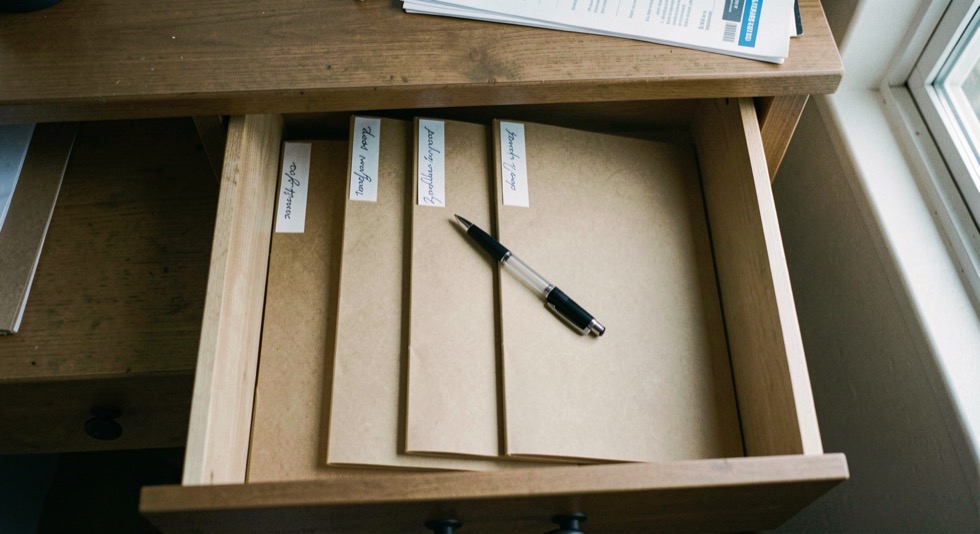
A framed picture goes into storage wrapped flat, face protected, glass never touching another surface. The glass is the fragile part: it scratches, it traps moisture against the paper, and it breaks inward if the frame is pressed. The paper is the slow part: light, damp and its own acidity work on it for years. Between hangings, both are served by the same few habits.
How is a framed picture wrapped for storage?
The wrap has three jobs: keep the glass off hard surfaces, keep dust and grit out of the frame rebate, and keep the whole thing flat. A sheet of acid-free tissue or clean cotton laid over the glass comes first. Newsprint is not suitable: the ink can transfer and the paper itself is acidic. Over that goes a layer of bubble wrap, bubbles facing outward, so the plastic does not press directly on the glass. The bundle is then taped, not tightly, along the edges of the frame rather than across the face.
Corners take the knocks. Small pads of foam or folded card taped over each corner cost nothing and absorb the impact that would otherwise crack the glass or split the mitre. For a picture with real value, or one that will sit for more than a season, a purpose-made box is worth the shelf space. Where no box exists, two boards cut slightly larger than the frame, one front and one back, sandwich the wrapped picture and stop it from flexing.
Glass should never be in direct contact with another frame. Stacking bare pictures face to face is how scratches appear in the middle of a pane, and how a corner of one frame dents the moulding of the next. If pictures must be stacked, they go face to face only when both are wrapped, and back to back otherwise, with a soft layer between. Anyone weighing up how much protection a picture needs, and how the frame itself is put together, will find the vocabulary and the practical distinctions set out at hanging and storing framed pictures, which treats the frame, the mount and the glass as one system rather than three separate purchases.
What does hanging a picture on a plaster wall ask of the fixing?
Plaster is a surface, not a structure. It is a thin skin, often over lath, brick or a modern board, and it holds almost nothing on its own. A nail tapped into plaster alone will hold a light frame for a while and then let go, usually at the moment someone walks past. The fixing has to reach whatever is behind the plaster, or spread its load across enough of the surface that the plaster is not asked to carry a point load.
For a light frame, a plasterboard plug or a hollow-wall anchor does the work: it opens behind the board and presses back against it. The drill bit should match the anchor, not the screw, and the hole should be made without a hammer action, which crumbles the edge. For anything heavier, a frame with glass and a wide mount, the fixing should find a stud, a batten or the masonry behind. A magnetic stud finder or a thin probe locates the timber; a masonry bit and a plastic plug do the rest.
Two hooks rather than one change the physics. A single central hook lets the frame swing and pivot; two hooks set at a third of the width from each side hold it flat against the wall and halve the load on each fixing. On an old lath wall, a picture rail is the honest answer: the weight goes into the rail, which was fixed to the structure when the house was built, and the picture hangs on cord or wire from there. The wall is left with nothing but a small hole that filler and paint will hide.
Where should pictures not be stored?
Four places do the damage. The loft is the first: it swings between heat and cold, and the condensation that forms on a cold pane in a warm loft is enough to bloom the paper behind the glass. The second is against an outside wall at floor level, where damp rises and the frame draws it. The third is a garage or shed, where the same damp meets exhaust fumes, petrol vapour and the occasional knock from a bicycle. The fourth is in direct sun, on a windowsill or a south-facing shelf, where ultraviolet light fades the paper and the mount at a rate that is invisible until it is not.
A cupboard inside the house, on an interior wall, is the better place. It should be dry, dark and reasonably stable in temperature. Pictures stand on edge or lie flat, never leaning at an angle against a wall for months, which bows the frame and puts a permanent curve into the paper. If the floor of the cupboard is concrete, a board or a shelf keeps the frame off it.
Wrapping is not a permanent state. A picture left sealed in plastic in a damp room can trap moisture as easily as it keeps it out. Where a picture is stored for a long period, the wrap should be breathable, or the bundle should be opened and aired once or twice a year.
What a picture needs between hangings
The interval between one wall and the next is when most damage happens, because nothing is being watched. A picture on a wall is looked at; a picture in a box is not. The habits that protect it are unglamorous: a clean layer against the glass, padding on the corners, a flat surface to lie on, and a place that is dry, dark and indoors.
It helps to label the bundle. A strip of masking tape on the outside with the subject and the room it came from saves an hour of unwrapping when the picture is wanted again. The same tape records whether the glass is original, which matters if the frame is ever taken apart.
The frame as a container
A frame is not just a border. It holds the glass away from the paper, carries the mount, and takes every knock the picture receives. When a picture is stored, the frame is doing that work in the dark, and the wrap is what stops the frame from being damaged in turn. A chipped moulding can be filled and touched in; a cracked pane over a watercolour is a different order of problem, because the shards move against the paper.
This is why the mount and the backing board deserve the same attention as the glass. A mount that has gone acidic will fox the paper it touches, and the damage shows as brown lines along the window of the mount. In storage, that process continues quietly. A picture kept for years in a warm loft may come out with foxing that was not there when it went in.
A short routine
Before a picture goes away, it is dusted with a dry, soft cloth, never a wet one. The glass is checked for cracks at the corners. The wrap goes on, the corners are padded, the bundle is labelled, and it is carried flat rather than on edge. It goes into an interior cupboard, not a loft, not a garage, not against an outside wall, not in the sun. Once or twice a year the bundle is opened, looked at, and closed again.
None of this takes long. It is the same order of work as closing a house before a week away: a few minutes now, against a repair later. The pictures that survive fifty years in a family are rarely the ones that were handled most carefully on the wall. They are the ones that were put away properly when they came down.
The wrapping method described here rests on how such objects are documented and handled in public collections. For the materials and construction of a frame, the museum collection record at the British Museum sets out what is known about comparable pieces, and that record is the source for the handling points above. The museum is not a partner or a sponsor of this entry, and no arrangement exists between the two. Where a frame is old, gilded or set with glass, check that record before choosing padding, tape or a box.
Frames go into storage wrapped, never bare. Glass is taped across with low-tack tape, corners are padded, and each picture is stood on its edge rather than laid flat. Before the paper goes on, run a hand over the frame and the visible wood, since a mark left under the wrap will sit there for months. The same habit of touch is set out in reading a finish on wood, which explains how an oiled surface and a lacquered one take damage differently. Label each bundle on the outside, and keep the list with the household inventory.
Once the paper is taped and the corners are padded, the same logic applies to anything that will later go back on a wall. A frame stored flat keeps its shape, but a frame hung badly is a different problem, and the fixing is what carries it. For the wall side of the job, Kept has a second entry on a mirror worth hanging, which sets out how the weight is taken by masonry or a stud and how the bottom edge rests on a rail. Read it before the pictures come back out of the box.
Framed pictures are the last thing to leave a wall and the first to suffer in a move. Glass cracks against a corner, paper cockles in a damp loft, and a frame that has hung for years holds dust in its joints. Wrapping is mostly a matter of order: paper against the glass, card over the paper, corners padded, the whole parcel stood upright, never flat. The same care applies to decor that a room already owns, where what hangs on a wall is treated as part of the room rather than an afterthought. A second entry on Kept takes the method further, from tape to labelling.