A seed tray on the windowsill
A windowsill in late winter gives far less light than most people assume: a south-facing pane in February delivers perhaps a tenth of the light a seedling would get outdoors in May, and a north-facing one much less again.
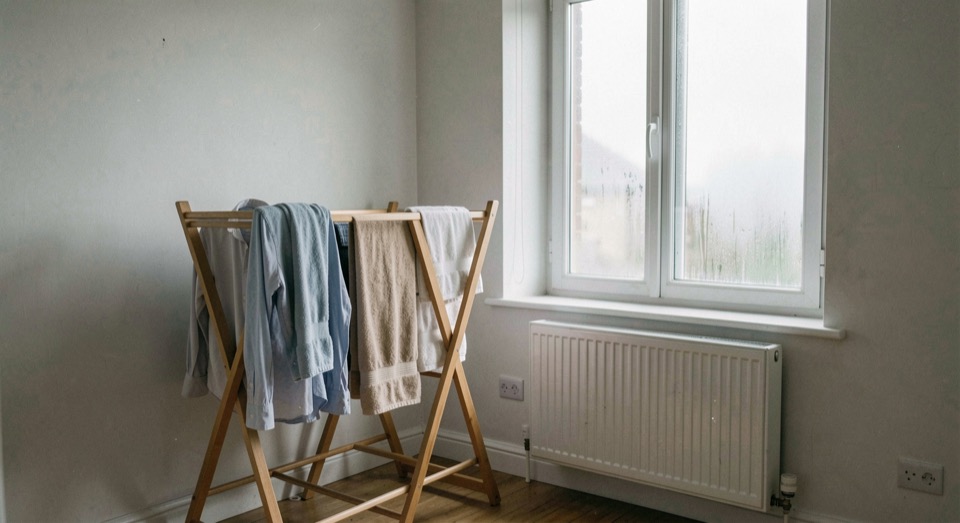
A windowsill in late winter gives far less light than most people assume: a south-facing pane in February delivers perhaps a tenth of the light a seedling would get outdoors in May, and a north-facing one much less again. Seed can be started indoors from late January onwards, but only if the tray is turned daily, kept close to the glass, and the seedlings are moved on before they stretch. Pricking out, the transfer of a seedling into its own pot, gives each plant room for its roots and a fresh supply of compost at the moment it needs both.
When should seed be started indoors?
The honest answer is: later than the seed packet suggests, unless the windowsill is unusually good. A packet printed for outdoor sowing gives a date range for the garden, not for a pane of glass in a heated room. The limiting factor indoors is light, not warmth, and light in late winter is short. A tomato sown on 1 February on a north-facing sill will be a pale, drawn thing by mid-March; the same seed sown on 20 March on a south-facing sill will be stocky and green.
A workable rule is to count backwards from the date the plant is expected to go outside. Tomatoes, peppers and aubergines need six to eight weeks indoors before the last frost. Hardy herbs such as parsley and coriander need four to six. Basil is faster still and resents cold, so it is usually sown four weeks before the intended move. Courgettes and other cucurbits germinate in days and grow quickly; three weeks indoors is enough, and more time on a sill makes them weak.
What matters more than the calendar is the state of the seedling. A plant that has produced its first true leaves, the pair that appears after the two seed leaves, is ready for more root room. A plant that is still on its seed leaves is not. Sowing in succession, a small pinch every two or three weeks, spreads the risk and gives a continuous supply rather than a glut followed by nothing. This is the same logic that governs any other household stock: small amounts, replaced often, rather than one large purchase that spoils.
For anyone who wants to go further than a sill, the protocols for indoor and hydroponic growing are set out in Italian at growing from seed, covering sowing, cuttings and continuous harvest for herbs and vegetables in pots and under lights.
What does pricking out do for a seedling?
Pricking out is the moment a seedling leaves the crowded tray and takes up its own pot. It does three things at once. It gives the roots room to spread instead of tangling with their neighbours. It moves the plant into fresh compost with nutrients still in it, at the point where the seed's own reserves are used up. And it lets the grower bury the stem slightly deeper, which for tomatoes and some other plants encourages new roots along the buried section.
The operation is best done when the compost is moist but not wet, and when the seedling has its first true leaves. A pencil, a small stick or a teaspoon handle is enough to lift the seedling under the roots, holding it by a seed leaf rather than the stem. The new pot is filled, firmed, and a hole made with the same stick. The seedling goes in, the compost is closed around it, and it is watered in gently to settle the roots.
After pricking out, the seedling needs a day or two out of direct sun and away from draughts. Some drooping is normal. What is not normal is a stem that stays limp for a week, which usually means the roots were damaged or the compost stayed too wet. Pricking out is also the moment to discard weak or distorted seedlings, rather than nursing them along at the expense of the rest.
How much light does a windowsill give in late winter?
Less than the numbers suggest. A clear south-facing window in the UK in late February receives, on a bright day, roughly a tenth of the light energy of full summer sun outdoors, and much of that arrives at a low angle that the glass reflects or the frame blocks. On an overcast day the figure falls again. A north-facing window gets no direct sun at all in winter and gives perhaps a twentieth of outdoor summer light.
The practical consequences are simple. Distance from the glass matters more than the direction of the window: a tray 30 cm back from the pane can receive half the light of one pressed against it. Glass also filters and diffuses, and a net curtain or a blind cuts the light further. Turning the tray a quarter turn each day keeps seedlings from leaning permanently towards the pane. A sheet of kitchen foil behind the tray, angled to bounce light back onto the leaves, is a cheap way to raise the total.
Supplementary light is the honest answer for anyone sowing before mid-March. A small fluorescent or LED tube held a few centimetres above the leaves for twelve to sixteen hours a day makes the difference between a plant that will crop and one that will not. The tube must be close, because light falls off sharply with distance, and it must be on a timer, because plants need a dark period as well as a light one.
Watering, warmth and the first true leaves
A seed tray on a sill dries unevenly. The edge nearest the radiator or the glass loses moisture first, and the middle stays damp. Watering from below, by standing the tray in a shallow dish and letting it take up what it needs, avoids disturbing the surface and gives a more even result. The surplus in the dish is poured away after twenty minutes rather than left standing.
Most seeds germinate between 18 and 22 degrees Celsius. A windowsill above a radiator can be warmer than that by day and much colder by night, and the swing is harder on seedlings than a steady temperature. A sheet of newspaper between the tray and the glass at night reduces the chill without cutting the morning light. Once the seedlings are up, they generally prefer slightly cooler conditions, which keeps them stocky.
Damping off, the collapse of seedlings at soil level, is the commonest failure on a sill. It comes from still air, wet compost and crowding. Sowing thinly, removing the lid or plastic as soon as the first seedlings appear, and watering in the morning rather than the evening all reduce it. A small fan on the lowest setting for an hour a day thickens the stems and discourages the fungus.
Moving on and hardening off
A seedling that has filled its pot with roots is ready to move on, either into a larger pot or, when the weather allows, into its final position. The transition from indoor warmth to outdoor conditions is the step most often rushed. Hardening off takes seven to ten days: an hour outside on the first day, two on the second, and so on, with the plants brought in at night at first and left out later as the temperature allows. A cold frame does the same job with less carrying.
Frost is the limit. In most of the UK the last frost falls between mid-April and mid-May depending on the region, and tender plants such as tomatoes, basil and courgettes should not be left out overnight before that date. Hardy herbs and leafy crops can go out earlier, but even they benefit from a week of gradual exposure.
The windowsill is a starting place, not a growing place. Its job is to carry a plant through the few weeks between sowing and the point where it can fend for itself outdoors or in a larger container. Judged on that, a tray on a south-facing sill, turned daily, watered from below and moved on at the right moment, does the job well enough for a household that wants its own herbs and a few tomatoes.
A seed tray on the windowsill is the smallest version of the same habit. Fill it in late winter, keep the compost damp, and turn the tray once the seedlings lean. Most of what comes up is thinned, not planted out, and the thinnings go straight into a pan. For households that keep the pot in view when they choose what to sow, cooking from a small garden is the longer version of the same argument, and it sits beside this entry in Provisions.
A seed tray on the windowsill follows the same logic as any other planting: water arrives in small amounts, at the right time, and the roots do the rest. Once the seedlings are pricked out and the bed is established, the quantities change, and a garden in a dry summer needs roughly 25 to 40 litres per square metre each week, delivered slowly and early. Newly planted beds take about twice that for two seasons. The tray is only the first step of that arithmetic.
A seed tray on the windowsill works best when the rest of the kit has a home. The tray itself needs little: light, water, and a label with the sowing date. What goes wrong is the clutter around it, the packets, the trowel, the feed scoop for the animals, all drifting across the kitchen. A single shelf by the back door takes them, and the windowsill stays a windowsill. Kept files that arrangement under a shelf for garden kit, with the weekly items at waist height and the rest in a lidded box below.